
5 Steps to Boost Filming Productivity with ABCDE Time Management

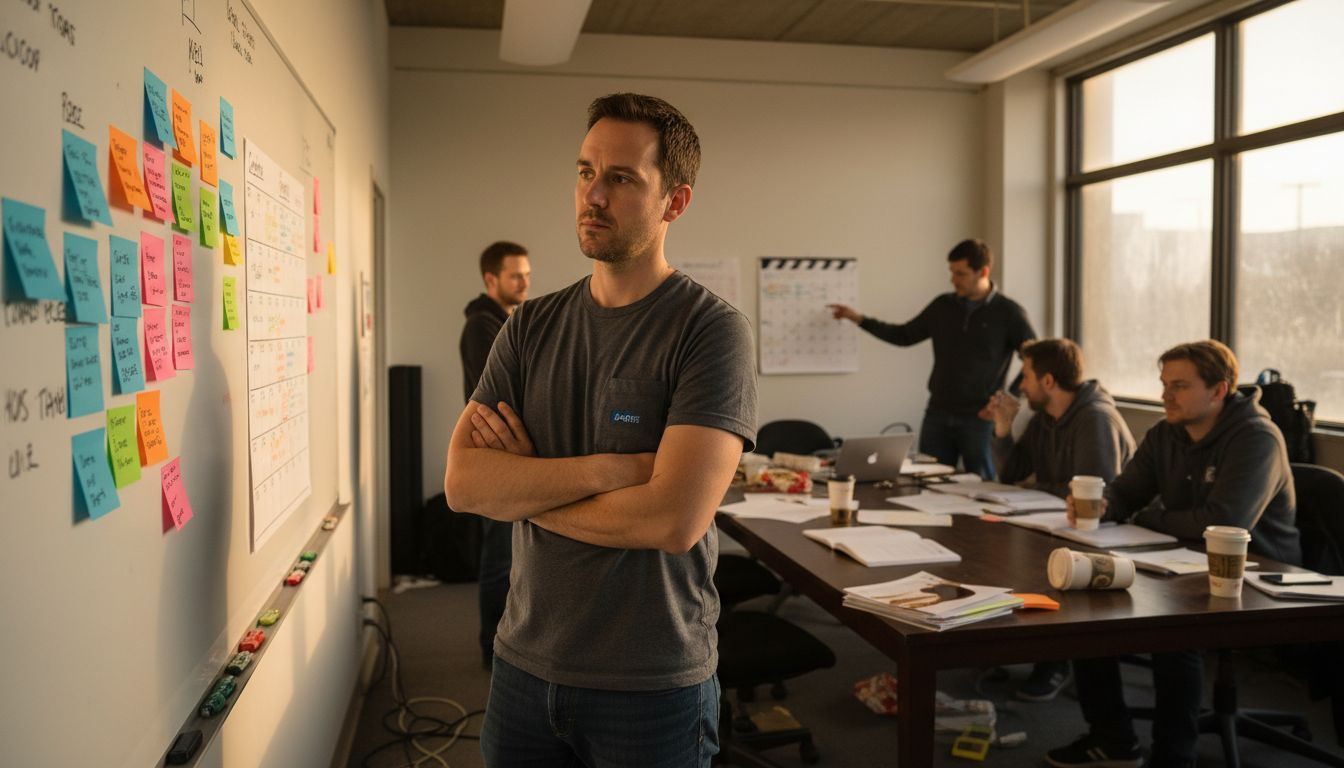
Every American film producer knows that missing a permit deadline in Switzerland can set back production by weeks. Reliable project management is vital when juggling location regulations, crew schedules, and tight shooting windows. With over 90 percent of international shoots grappling with resource allocation challenges, finding the right support is the difference between seamless on-time delivery and costly delays. This guide uncovers proven task prioritization and workflow strategies for smooth, hassle-free video shoots in Switzerland.
Table of Contents
Quick Summary
Takeaway | Explanation |
1. Prioritize Tasks Effectively | Use the ABCDE framework to categorize film production tasks by priority for optimal management. |
2. Implement a Workflow Breakdown | Systematically map and organize production tasks to create an efficient production roadmap. |
3. Coordinate Scheduling Precisely | Timely coordination of permits and crew availability is vital for smooth shooting schedules. |
4. Delegate Wisely for Efficiency | Match tasks to team members’ strengths to foster collaboration and maximize productivity. |
5. Regularly Evaluate Progress | Continuously monitor project milestones and adapt plans to stay on track for completion. |
1. Assess Film Production Tasks by Priority
Managing a film production requires strategic task prioritization that transforms chaos into calculated progress. The ABCDE method provides filmmakers a systematic approach to organizing complex production workflows by categorizing tasks according to their strategic importance and immediate impact.
In film production, not all tasks carry equal weight. Some activities directly influence project momentum while others represent supportive background work. Understanding production task hierarchies allows teams to allocate resources efficiently and maintain critical project timelines.
The ABCDE prioritization framework breaks down tasks into five strategic categories:
A Tasks: Critical mission critical activities that cannot be delayed
Script finalization
Key casting decisions
Location permits
Primary equipment procurement
B Tasks: Important but not immediately urgent
Crew hiring
Costume design
Secondary equipment rentals
Initial location scouting
C Tasks: Nice to complete but not essential
Additional wardrobe options
Extended location research
Backup equipment lists
D Tasks: Delegate to team members
Administrative paperwork
Equipment inventory
Basic scheduling support
E Tasks: Eliminate or minimize
Redundant meetings
Unnecessary approvals
Low impact administrative work
Successful implementation requires honest assessment and continuous reevaluation. Film producers must remain flexible while maintaining a structured approach to task management.
Pro Tip: Create a visual prioritization board that allows your entire production team to understand task hierarchies at a glance, ensuring everyone remains aligned with project objectives.
2. Break Down Workflows Using the ABCDE Method
Film production workflows are notoriously complex, with dozens of interconnected tasks competing for attention and resources. The ABCDE method provides a powerful framework for systematically organizing and executing these intricate production processes.
Workflow breakdown strategies transform chaotic production environments into structured, manageable systems. By categorizing tasks according to their strategic importance, filmmakers can create a clear roadmap that prioritizes critical activities while minimizing wasted effort.
Implementing the ABCDE Workflow Breakdown
The process involves five strategic steps for comprehensive task management:
Map Out All Production Tasks
List every single activity required for the film project
Include tasks from preproduction through post production
Capture both major and minor responsibilities
Categorize Tasks Systematically
A Tasks: Highest priority and mission critical
B Tasks: Important but not immediately urgent
C Tasks: Supportive activities
D Tasks: Delegable responsibilities
E Tasks: Eliminate or minimize
Assign Time and Resource Estimates
Calculate approximate duration for each task
Identify potential resource requirements
Estimate potential bottlenecks or challenges
Create Hierarchical Task Sequences
Establish logical task dependencies
Understand how activities interconnect
Develop flexible yet structured workflow progression
Implement Continuous Monitoring
Regularly reassess task categories
Adjust priorities as production evolves
Maintain adaptability throughout the project
Advanced workflow management techniques demonstrate that successful film productions require dynamic task strategies. The most effective teams remain flexible while maintaining a structured approach to project execution.
Pro Tip: Design a visual workflow board that allows your entire production team to see task priorities and dependencies at a single glance, ensuring everyone remains aligned and focused on critical objectives.
3. Coordinate Permits and Crew with Timely Scheduling
Successful film production hinges on precise coordination between permits, crew availability, and shooting schedules. Mastering this complex choreography requires strategic planning and proactive management.
Advanced scheduling approaches reveal that effective production coordination involves sophisticated decision support systems that synchronize multiple moving parts simultaneously.
Key Coordination Strategies
Permit Acquisition Timeline
Start permit applications 4 to 6 weeks in advance
Research specific location requirements
Create comprehensive documentation package
Budget time for potential bureaucratic delays
Crew Scheduling Frameworks
Map individual crew member availability
Create flexible scheduling buffers
Confirm backup personnel for critical roles
Develop contingency plans for potential absences
Resource Alignment Techniques
Cross reference permit windows with crew schedules
Identify potential scheduling conflicts early
Develop integrated production calendars
Implement digital tracking systems
Communication Protocols
Establish clear communication channels
Use centralized scheduling platforms
Provide regular schedule update briefings
Maintain transparent availability tracking
Predictive Planning ApproachesOptimization strategies for movie scheduling demonstrate the importance of forecasting potential disruptions and building adaptive scheduling models.
Critical Considerations
Local regulations vary significantly
Weather conditions impact shooting schedules
Crew availability changes frequently
Unexpected logistical challenges are common
Pro Tip: Create a master production calendar that color codes permit windows, crew availability, equipment reservations, and potential risk zones, allowing instant visual comprehension of complex scheduling dynamics.
4. Delegate Essential Tasks for Maximum Efficiency
Film production is a collaborative ecosystem where success depends on strategic task allocation and team synergy. Effective delegation transforms complex projects from potential chaos into streamlined, high performance operations.
Collaborative filmmaking practices demonstrate that successful productions balance creative autonomy with structured management through intelligent task distribution.
Delegation Framework for Film Productions
Identify Specialized Strengths
Conduct comprehensive team skill assessment
Match team members to tasks matching their expertise
Create role specific responsibility matrices
Recognize individual performance capabilities
Establish Clear Expectations
Define precise task outcomes
Set measurable performance benchmarks
Communicate deadlines and quality standards
Create accountability mechanisms
Implement Communication Protocols
Design centralized reporting systems
Schedule regular progress check ins
Utilize project management software
Create transparent workflow tracking
Build Trust Through Empowerment
Provide necessary resources
Allow creative problem solving
Minimize micromanagement
Recognize individual contributions
Create Backup and Support Systems
Develop contingency plans
Cross train team members
Establish mentorship opportunities
Design redundancy into critical roles
Delegation Best Practices
Understand individual team member capabilities
Align tasks with team strengths
Maintain open communication channels
Monitor progress without excessive intervention
Pro Tip: Develop a skills matrix spreadsheet that visually maps each team members professional capabilities, allowing instant identification of optimal task assignments and potential skill development opportunities.
5. Evaluate Progress and Adjust Plans for On-Time Completion
Successful film production requires continuous monitoring and strategic adaptation. Progress evaluation is not a passive activity but an active process of identifying challenges and implementing dynamic solutions.
Structured progress reporting techniques reveal that consistent milestone tracking enables teams to maintain production momentum and prevent potential delays.
Comprehensive Progress Evaluation Framework
Establish Baseline Performance Metrics
Define clear project milestones
Create quantifiable performance indicators
Set specific completion time targets
Document initial production benchmarks
Implement Regular Check In Processes
Schedule weekly production review meetings
Create standardized reporting templates
Track budget expenditure against timeline
Analyze task completion rates
Develop Adaptive Planning Strategies
Design flexible workflow modifications
Create contingency time buffers
Identify potential bottleneck areas
Prepare alternative production approaches
Utilize Technological Tracking Tools
Implement digital project management software
Create real time progress dashboards
Use collaborative tracking platforms
Integrate automated reporting systems
Foster Open Communication Channels
Encourage team transparency
Create safe spaces for problem identification
Develop constructive feedback mechanisms
Promote proactive issue resolution
Reflective filmmaking practices emphasize the importance of continuous assessment and strategic adaptation throughout the production process.
Critical Evaluation Considerations
Track both quantitative and qualitative metrics
Remain flexible and solution oriented
Prioritize team collaboration
Focus on continuous improvement
Pro Tip: Create a color coded progress tracking spreadsheet that visually represents project status using green for on track tasks, yellow for potential risks, and red for critical issues requiring immediate attention.
Below is a comprehensive table summarizing the key strategies and concepts discussed regarding effective film production management and task prioritization outlined in the article.
Aspect | Details | Benefits |
Prioritization Methods | Utilize the ABCDE framework to classify tasks into A (critical), B (important), C (non-essential), D (delegable), and E (eliminable). | Promotes efficient resource allocation and maintains focus on critical project elements. |
Workflow Breakdown | Map all production tasks, categorize strategically, and establish logical task sequences while monitoring progress. | Enhances adaptability and systematic management of intricate workflows. |
Scheduling Coordination | Schedule permitting, crew availability, and resources, in conjunction with predictive planning and conflict resolution. | Ensures efficient management of tightly integrated production schedules and early mitigation of potential delays. |
Delegation Strategy | Delegate roles by identifying team strengths, providing clear expectations, and monitoring progress collaboratively. | Improves operational efficiency, fosters team cohesion, and capitalizes on individual expertise. |
Continuous Evaluation | Regularly assess progress with defined metrics, use technological tools for real-time tracking, and modify plans adaptively. | Supports ongoing project improvement, ensures project timeliness, and addresses emerging challenges swiftly. |
Streamline Your Film Production with Expert Support in Switzerland
Managing film production using the ABCDE time management method demands precise coordination of permits, crew, and equipment alongside effective task prioritization. If you face challenges like securing location permits on time or aligning your local crew schedule with critical A Tasks, Video Production Switzerland offers trusted solutions designed to eliminate these stressful bottlenecks. Their 20 years of local market knowledge and dedicated logistical management ensure your project stays on schedule while you focus on creative execution.
Experience the power of seamless delegation and adaptive scheduling backed by a reliable partner who understands that timely permit acquisition, expert crew hiring, and resource alignment are mission critical. Avoid common pitfalls such as bureaucratic delays and unexpected absences with their comprehensive support in sourcing permits, trusted crew, and all necessary equipment.
Boost your filming productivity today by partnering with a local expert who transforms logistical complexity into smooth, on-time shoots. Visit Video Production Switzerland for a free consultation and discover how specialized management of your most critical film production tasks can make your next project a success.
Frequently Asked Questions
How can I prioritize tasks effectively in film production using the ABCDE method?
The ABCDE method helps you categorize tasks into five levels of importance. Start by listing all your production tasks and assign them to one of the five categories to determine which tasks are critical, important, nice to do, delegable, or unnecessary.
What types of tasks should I include in each category of the ABCDE prioritization framework?
In the ABCDE framework, assign ‘A’ tasks as critical items like script finalization and equipment procurement. Use ‘B’ for important tasks like crew hiring, ‘C’ for non-essential tasks, ‘D’ for those to delegate, and ‘E’ for tasks to minimize or eliminate.
How often should I reassess my task priorities when using the ABCDE method?
Regularly reassess your task priorities throughout the production process. Aim to conduct these evaluations at least every few weeks or after major production milestones to adapt to any changes and ensure you stay on track.
What tools or methods can assist with visualizing my task priorities and workflows?
Creating a visual prioritization board or using a digital project management tool can help your team see task hierarchies and dependencies. Implement this method during your preproduction phase to enhance alignment and focus within the team.
How can effective communication improve task delegation in film production?
Clear communication is crucial for successful task delegation. Establish regular check-ins and provide specific expectations to ensure team members understand their roles and deadlines, increasing overall productivity.
What strategies can I use to evaluate progress and ensure timely completion of film production tasks?
Establish performance metrics and schedule regular progress reviews to stay on track. Utilize tools to create real-time dashboards that visually represent project status and identify potential delays to address problems proactively.
Recommended
