
Cultural Traditions in Switzerland: Keys to Authentic Filmmaking

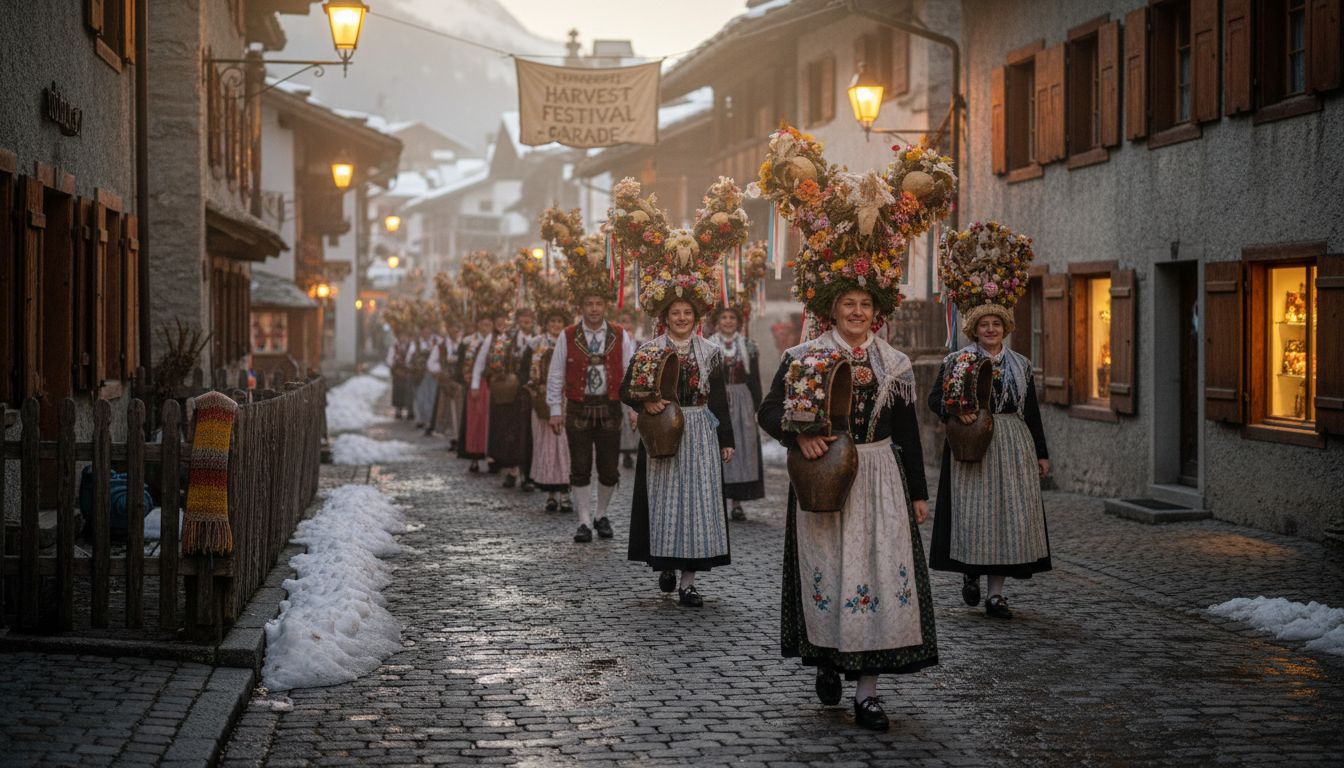
Most American audiences are surprised to learn that Switzerland is home to four official languages and a dazzling variety of local customs. This cultural mosaic shapes daily life and traditions across every region, making Swiss society one of the most diverse in Europe. From yodeling in the Alps to elaborate festivals rooted in centuries-old history, discover how Switzerland’s unique blend of languages and landscapes continues to inspire filmmakers and challenge stereotypes.
Table of Contents
Key Takeaways
Point | Details |
Cultural Diversity | Switzerland’s cultural traditions emerge from four language regions, contributing to a rich and nuanced identity. |
Regional Practices | Each region maintains unique customs that reflect historical and geographical contexts, emphasizing local traditions. |
Festivals and Celebrations | Major festivals, like the Vevey Winegrowers’ Festival, showcase the deep-rooted agricultural heritage and community spirit. |
Social Etiquette | Punctuality and respect for personal boundaries are crucial in Swiss social interactions, varying across linguistic regions. |
Defining Cultural Traditions in Switzerland
Switzerland’s cultural traditions represent a fascinating tapestry of regional practices deeply rooted in linguistic diversity and geographic complexity. Unlike monolithic national identities, Swiss cultural traditions emerge from intricate interactions between four primary language regions: German, French, Italian, and Romansh. These traditions reflect not just historical practices, but living, evolving expressions of community identity.
At the heart of Swiss cultural expression are practices profoundly connected to landscape and seasonal rhythms. Traditions like yodeling and alphorn music exemplify how Swiss communities have historically communicated across mountainous terrain, transforming practical communication into artistic performance. These musical forms aren’t mere historical artifacts but continue to represent national pride and cultural continuity.
The multicultural nature of Swiss traditions means filmmakers must approach cultural representation with nuanced understanding. Regional variations significantly impact cultural expression - what represents tradition in a German-speaking canton might differ dramatically from practices in a French-speaking region. Switzerland’s cultural creativity emerges from this remarkable linguistic and geographic diversity, producing a rich environment where traditions are simultaneously preserved and dynamically reinterpreted.
Key aspects of authentic Swiss cultural traditions include:
Deep respect for local community practices
Preservation of regional linguistic identities
Strong connection between cultural practices and natural landscape
Emphasis on precision, quality, and craftsmanship
Continuous evolution of traditions without losing core cultural essence
For international filmmakers, understanding these nuanced cultural dynamics means moving beyond stereotypical representations to capture the genuine complexity of Swiss social fabric.
Regional Diversity and Unique Swiss Customs
Switzerland’s regional diversity manifests through an extraordinary array of local customs that go far beyond typical national stereotypes. Each of the country’s linguistic regions - German, French, Italian, and Romansh - contributes unique cultural practices that reflect deeply rooted historical and geographical contexts. Traditional sports and regional customs demonstrate the remarkable cultural complexity of Swiss social interactions.
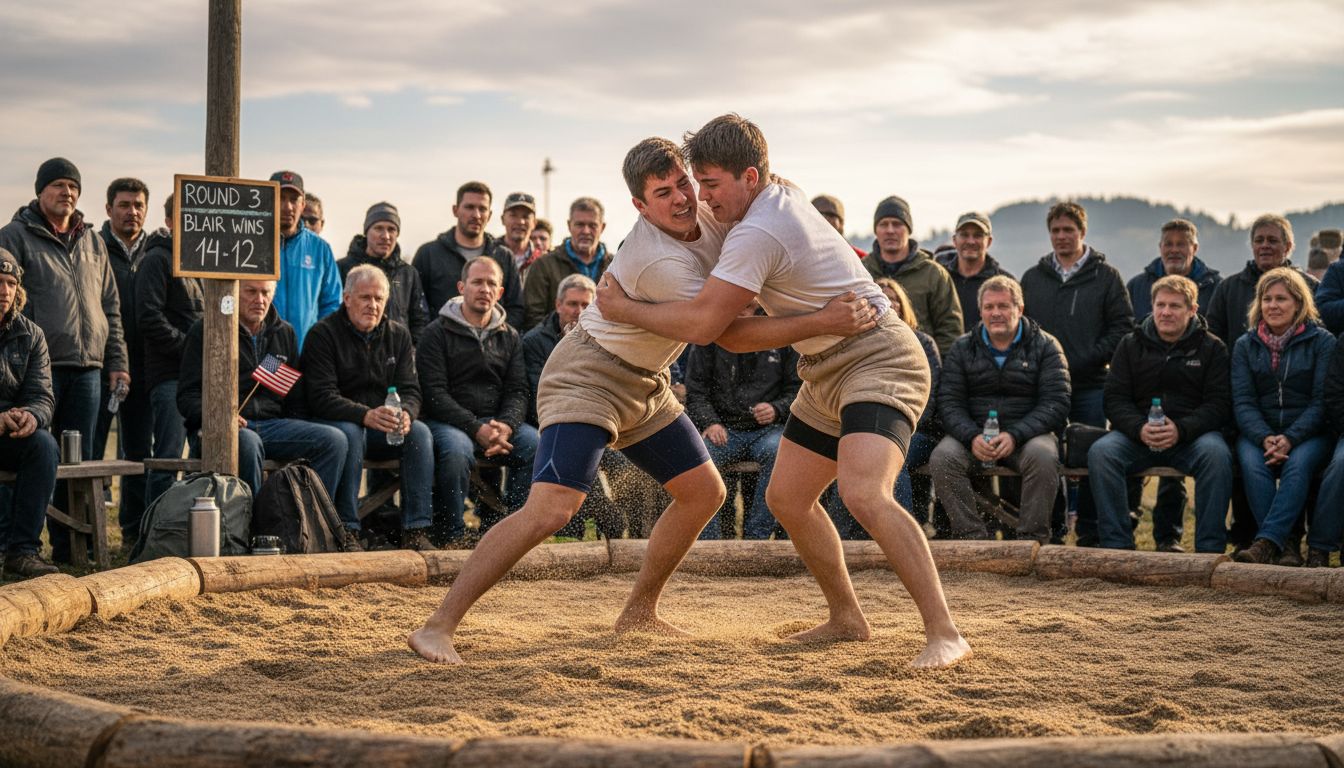
Particularly fascinating are the distinctive regional sports and competitions that embody Swiss cultural identity. Hornussen, a traditional sport blending elements of golf and baseball, originates from agricultural communities and represents more than mere athletic competition. Similarly, Schwingen - a form of Swiss wrestling where participants wear traditional shorts and grapple in sawdust rings - symbolizes strength, respect, and community values deeply embedded in Swiss rural traditions.
Switzerland’s regional traditions are intricately connected to agricultural practices and seasonal rhythms, reflecting a profound relationship between cultural expression and landscape. Mountain communities, for instance, developed unique communication methods like yodeling and alphorn playing that served practical purposes of signaling across valleys before becoming celebrated artistic traditions. These practices demonstrate how Swiss customs evolve, maintaining core cultural meanings while adapting to changing social contexts.
Key characteristics of Swiss regional diversity include:
Strong preservation of local linguistic identities
Deeply embedded agricultural and seasonal traditions
Unique regional sports and competitive practices
Emphasis on community cohesion and mutual respect
Continuous cultural adaptation without losing historical roots
Filmmakers seeking authentic representation must approach these traditions with nuanced understanding, recognizing that Swiss cultural identity is not monolithic but a dynamic, multifaceted expression of regional experiences.
Major Swiss Festivals and Celebrations
Switzerland’s festival landscape represents a vibrant tapestry of cultural expressions that blend historical traditions with contemporary celebrations. The Vevey Winegrowers’ Festival, recognized by UNESCO, epitomizes the profound cultural significance of these events, offering a rare glimpse into the nation’s deep-rooted agricultural heritage. Held once every generation, this extraordinary celebration transforms the entire city into a living narrative of viticulture and community spirit.
The Basel Carnival represents another pivotal cultural event with roots stretching back to 1418, showcasing the remarkable Protestant traditions through elaborate parades and satirical performances. This multi-day festival demonstrates how Swiss celebrations are not merely entertainment but complex cultural commentaries that reflect social dynamics, historical tensions, and community resilience.
Beyond these renowned festivals, Switzerland hosts numerous regional celebrations that capture the nuanced cultural diversity of its different linguistic regions. From alpine farming festivals in rural German-speaking cantons to elaborate wine harvest celebrations in French-speaking areas, these events serve as living archives of Swiss cultural memory. Each festival tells a unique story - of agricultural cycles, religious traditions, seasonal changes, and community bonds that have sustained Swiss society through generations.
Key characteristics of Swiss festivals include:
Deep connection to local historical narratives
Preservation of regional cultural identities
Intricate performances reflecting social commentary
Strong community participation
Seamless blend of traditional and contemporary elements
For filmmakers seeking authentic cultural representation, these festivals offer rich visual and narrative landscapes that extend far beyond surface-level stereotypes, revealing the complex, dynamic nature of Swiss cultural expression.
Social Etiquette and Everyday Practices
Swiss social etiquette emerges from a profound respect for traditions and community practices, reflecting a complex cultural landscape that goes far beyond simple behavioral norms. Rooted deeply in historical agricultural contexts, these social interactions are characterized by precision, punctuality, and a nuanced understanding of interpersonal boundaries that vary significantly across the country’s linguistic regions.
Traditional social activities like playing Jass, a card game with roots dating back to the 18th century, exemplify the importance of community engagement in Swiss everyday life. These seemingly simple interactions represent intricate social rituals that reinforce community bonds, test social skills, and provide a platform for non-verbal communication that outsiders might easily misunderstand.
The multilingual nature of Swiss society adds layers of complexity to social interactions, with each linguistic region - German, French, Italian, and Romansh - maintaining distinct social protocols. Punctuality is universally revered, but the expression of politeness, the acceptable physical distance during conversations, and communication styles can differ dramatically. Subtle gestures, tone modulation, and unspoken rules of engagement become critical elements of successful social navigation.
Key aspects of Swiss social etiquette include:
Absolute commitment to punctuality
Respect for personal and professional boundaries
Value placed on direct yet polite communication
Strong emphasis on individual privacy
Appreciation for structured social interactions
For filmmakers seeking authentic representation, understanding these nuanced social practices means moving beyond surface-level observations to capture the intricate social choreography that defines Swiss interpersonal dynamics.
Impacts on Film Production and Creative Storytelling
Switzerland’s multilingual and multicultural landscape profoundly transforms creative storytelling approaches in film production, presenting unique narrative opportunities that challenge traditional cinematic perspectives. The intricate interplay between German, French, Italian, and Romansh cultural contexts creates a rich narrative environment where storytellers can explore complex human experiences through nuanced, layered perspectives rarely found in more homogeneous cultural settings.
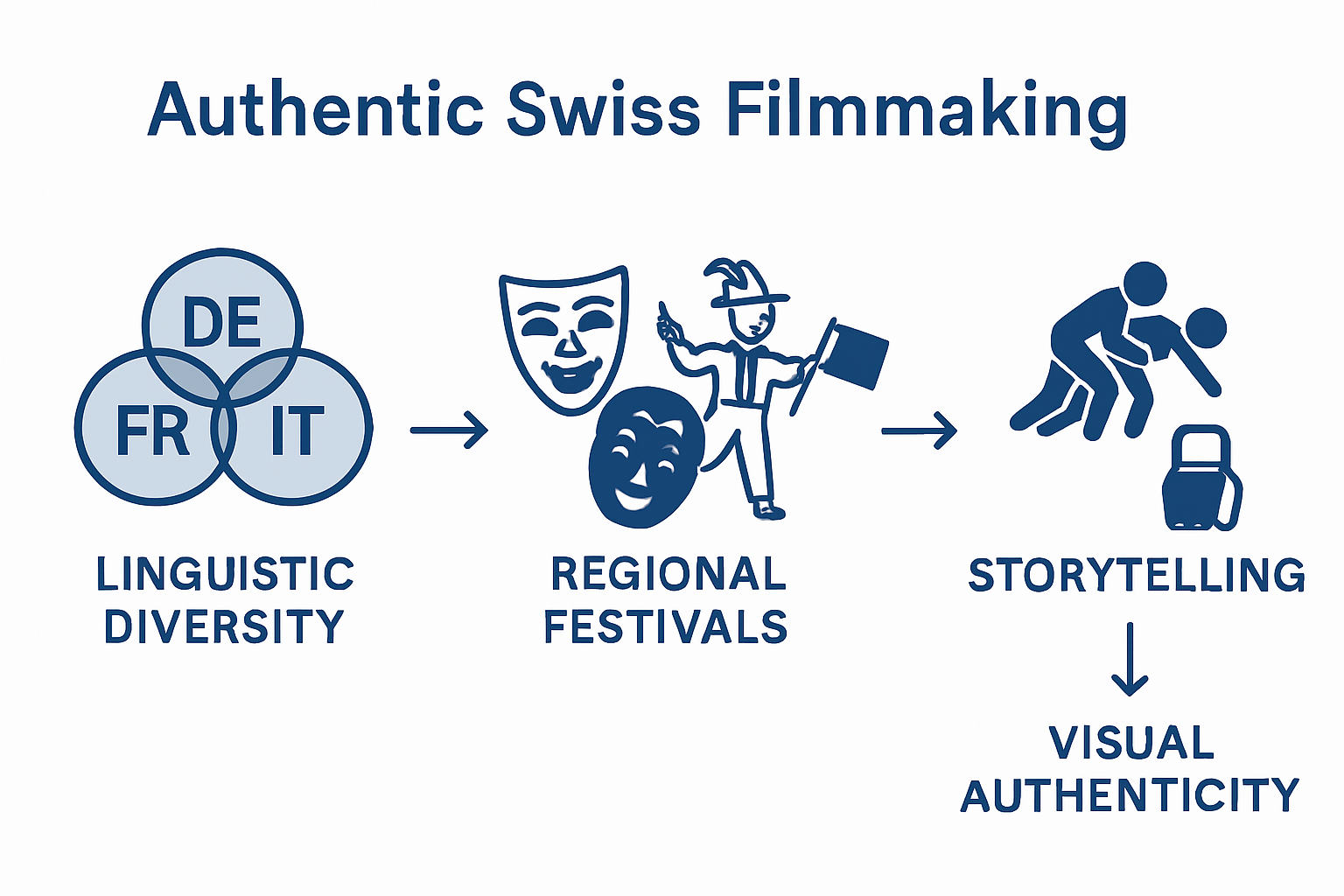
Traditional Swiss cultural practices offer filmmakers extraordinary source material for authentic storytelling. UNESCO-recognized traditions like the Vevey Winegrowers’ Festival provide deep wells of narrative inspiration, allowing directors to craft stories that are simultaneously hyper-local and universally resonant. These cultural touchstones enable filmmakers to move beyond stereotypical representations, instead presenting intricate human stories rooted in genuine cultural experiences.
The Swiss approach to filmmaking transcends mere technical proficiency, emphasizing narrative complexity and cultural authenticity. Each linguistic region contributes unique storytelling rhythms - the precise Germanic narrative structures, the emotionally nuanced French storytelling traditions, the passionate Italian narrative approaches, and the minimalist Romansh storytelling techniques. This diversity demands that filmmakers develop sophisticated cross-cultural communication skills and deep cultural empathy.
Key considerations for authentic Swiss storytelling include:
Respecting linguistic and cultural nuances
Embracing narrative complexity
Exploring multicultural perspectives
Maintaining cultural integrity
Balancing traditional and contemporary narratives
For international filmmakers, understanding these subtle cultural dynamics represents the difference between superficial representation and genuinely transformative storytelling.
Capture Authentic Swiss Traditions with Professional Video Production Support
Filmmakers inspired by Switzerland’s rich cultural traditions face the challenge of navigating diverse linguistic regions and deeply rooted community practices. From the precise social etiquette to iconic festivals like the Vevey Winegrowers’ Festival, capturing genuine Swiss cultural stories demands expert local knowledge, seamless logistics, and respect for nuanced regional differences. Overcoming complexity around permits, location scouting, and coordinating with trusted crews is essential to bring these layered narratives to life.

Elevate your project with Video Production Switzerland, your trusted local partner with over 20 years of experience managing film shoots across Swiss German, French, Italian, and Romansh regions. We specialize in handling all logistical details so you can focus on authentic storytelling that reflects Switzerland’s unique traditions and social fabric. Visit our homepage today to start your free consultation and unlock the full potential of your Swiss film production.
Frequently Asked Questions
What are some key aspects of Swiss cultural traditions for filmmakers to understand?
Filmmakers should understand the deep respect for local community practices, preservation of regional linguistic identities, and the strong connection between cultural practices and the natural landscape. Emphasizing precision, quality, and craftsmanship while recognizing that traditions are continuously evolving is also crucial.
How do traditional Swiss customs reflect agricultural practices?
Traditional Swiss customs are closely tied to agricultural practices and seasonal rhythms. For example, sports like Hornussen and Schwingen connect to the rural lifestyle and symbolize community values, while famous musical forms like yodeling emerged as practical communication methods in mountainous areas.
What is the significance of Swiss festivals in cultural representation?
Swiss festivals, such as the Vevey Winegrowers’ Festival and Basel Carnival, offer insights into the nation’s historical narratives and community bonds. These events blend traditional elements with contemporary performances, making them rich sources for authentic storytelling in film.
How does Switzerland’s linguistic diversity impact filmmaking?
Switzerland’s multilingual landscape challenges filmmakers to embrace narrative complexity and cultural authenticity. Each linguistic region provides unique storytelling rhythms and cultural nuances, demanding cross-cultural communication skills and deep cultural empathy for genuine representation.
Recommended
