
Drone Regulations Switzerland: Complete Legal Guide

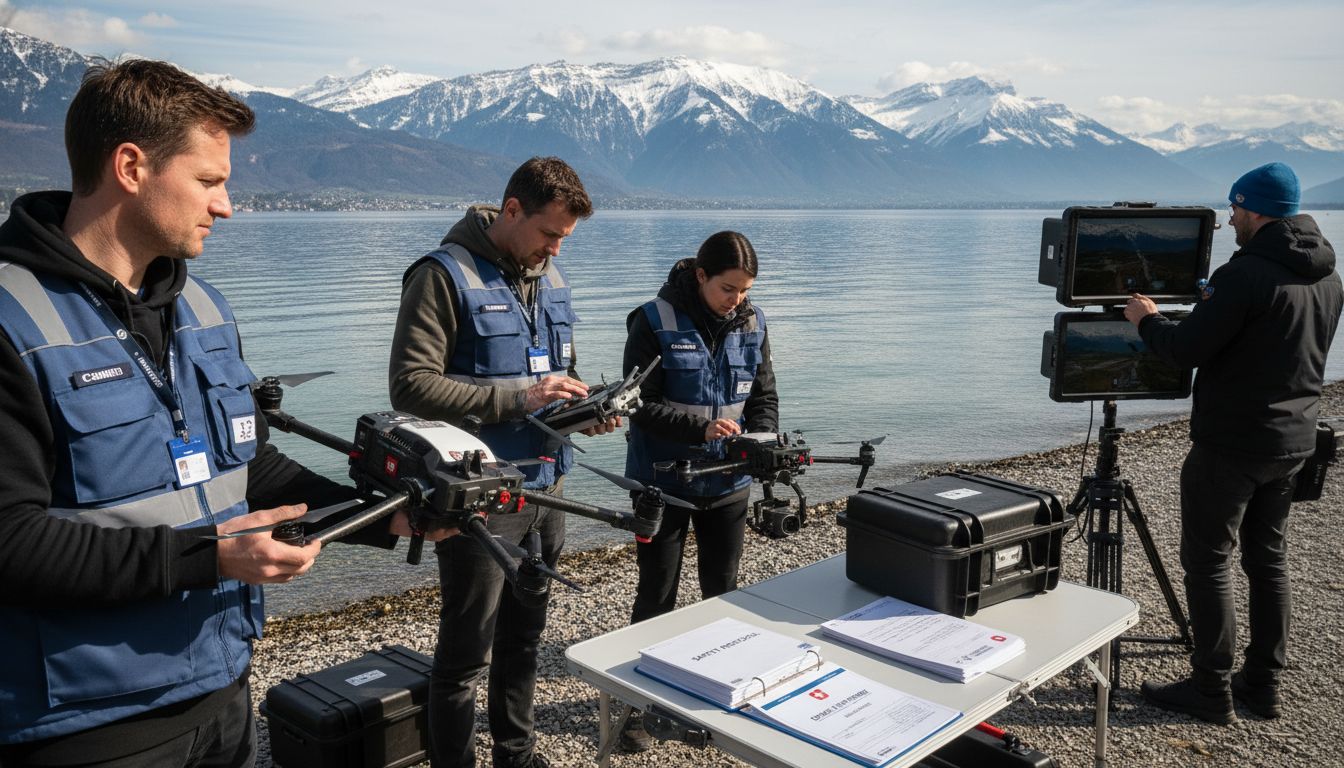
Over 90 percent of aerial video projects in Switzerland now fall under strict new drone regulations introduced in 2023. These updated rules touch everyone from hobby pilots to international film crews, reshaping what is possible in the Swiss sky. If you want to fly legally and safely, understanding how drones are categorized and the detailed requirements for each operation is absolutely vital. This guide unpacks the key points every professional and enthusiast needs to know before planning a drone flight in Switzerland.
Table of Contents
Key Takeaways
Point | Details |
Drone Categories | Switzerland classifies drone operations into three categories: OPEN, SPECIFIC, and CERTIFIED, based on risk levels and operational requirements. |
Legal Compliance | Operators must register their drones, complete an examination, and adhere to operational rules to avoid legal penalties. |
Restricted Areas | Drones are prohibited from flying in designated restricted zones, requiring special permissions for operations near sensitive locations. |
Penalties for Breaches | Non-compliance with regulations can lead to significant fines, equipment confiscation, and revoked operating privileges, emphasizing the need for thorough understanding of local laws. |
Defining Drone Regulations in Switzerland
Switzerland has established comprehensive drone regulations that align with modern safety standards and technological advancements. As of 1 January 2023, the country adopted EU-wide drone regulations, creating a structured framework that categorizes drone operations based on risk levels and operational requirements bazl.
Drone Operation Categories are now systematically defined into three distinct risk classifications:
OPEN Category: Low-risk operations with minimal regulatory constraints
SPECIFIC Category: Moderate-risk operations requiring additional permissions
CERTIFIED Category: High-risk operations demanding extensive safety certifications
These regulatory categories represent a significant shift in how drone activities are managed.
According to ethz, the new regulations impact various stakeholders, including institutional users like universities and research centers, ensuring standardized safety protocols across different operational contexts.
The implementation of these regulations means international video production teams must carefully navigate the specific requirements for each drone operation category.
Here’s a summary of key requirements for each drone operation category in Switzerland:
Category | Risk Level | Permissions Needed | Typical Uses |
OPEN | Low | No prior authorization | Hobby flights Basic video shoots |
SPECIFIC | Moderate | Additional permissions | Commercial filming Special surveys |
CERTIFIED | High | Extensive certification | Industrial operations Passenger use |
Factors such as drone weight, flight altitude, proximity to populated areas, and intended use will determine the applicable regulatory framework. Professional operators will need to obtain appropriate certifications, register their equipment, and comply with specific operational guidelines to legally conduct drone-based filming or aerial photography in Switzerland. |
Types of Drones and Usage Categories
Drone technology has evolved dramatically, with multiple types designed for specific operational needs and regulatory requirements. UAS Solutions identifies four primary drone classifications that video production teams and professional operators should understand: single-rotor, multi-rotor, fixed-wing, and hybrid fixed-wing designs.
Drone Classifications by Technical Design:
Single-Rotor Drones: Helicopter-like design, ideal for heavy lifting and specialized industrial applications
Multi-Rotor Drones: Most common for video production, offering stable hovering and precise maneuverability
Fixed-Wing Drones: Airplane-like design, excellent for long-distance mapping and surveying
Hybrid Fixed-Wing Drones: Combining vertical takeoff capabilities with extended flight ranges
Swiss drone regulations, as outlined by bazl, categorize these drone types into operational risk levels: OPEN, SPECIFIC, and CERTIFIED categories. The classification depends on factors like drone weight, operational altitude, proximity to populated areas, and intended use. For international video production teams, understanding these categories is crucial for legal compliance and smooth aerial filming operations in Switzerland.
Professional drone operators must carefully match their equipment’s capabilities with the appropriate regulatory category.
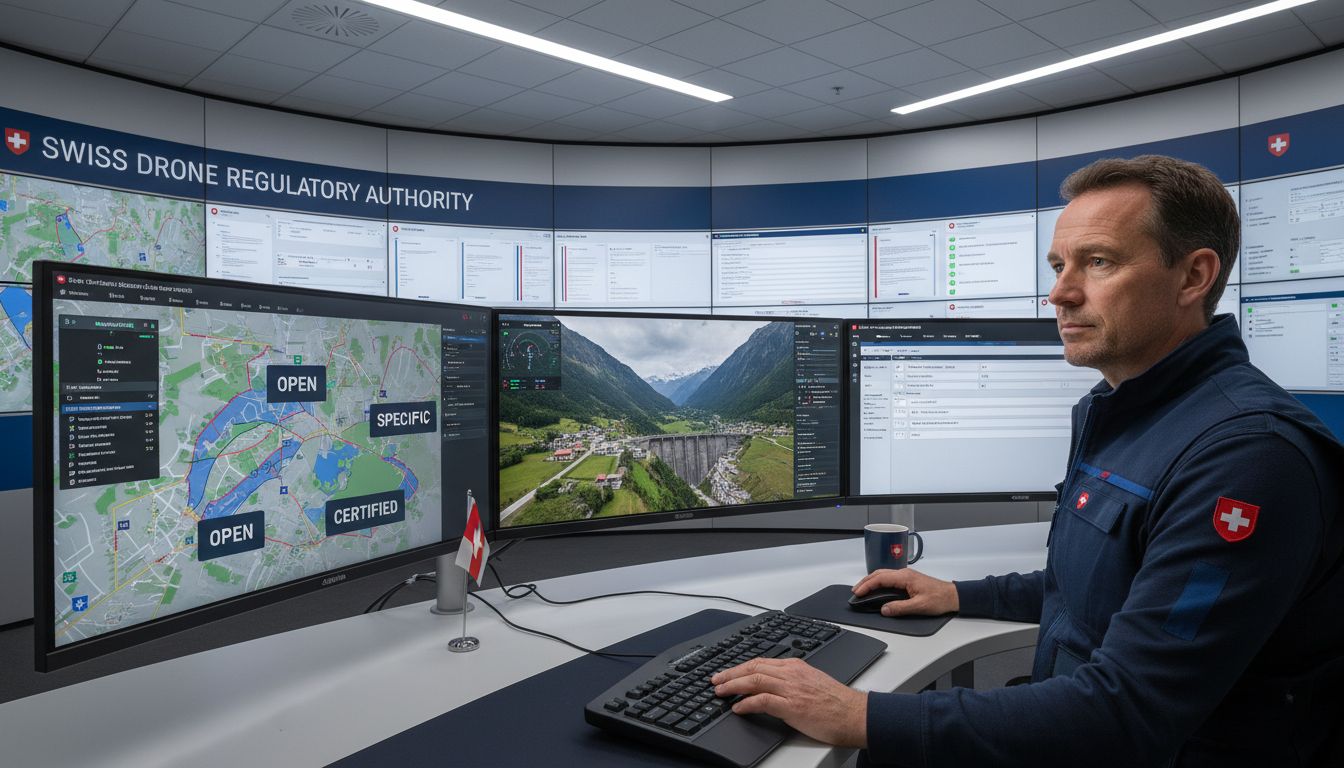
Multi-rotor drones, which are most common in media production, typically fall under the OPEN or SPECIFIC categories. Operators will need to consider payload weight, flight duration, camera specifications, and intended filming locations to determine the exact regulatory requirements and necessary certifications for their drone operations.
Swiss Legal Requirements for Drone Operators
Drone operators in Switzerland must navigate a complex landscape of legal requirements that have significantly evolved since 2023. CH.ch reports that most amateur pilots are now required to register their equipment and successfully complete an online examination, with specific requirements varying based on drone categories and operational classes.
Key Registration and Certification Requirements:
Mandatory online registration for drone operators
Completion of required online examination
Different certification levels based on drone weight and intended use
Proof of operational knowledge and safety understanding
For low-risk operations, the OPEN category provides some flexibility. According to bazl, drone operations in this category can be conducted without prior authorization from the Federal Office of Civil Aviation (FOCA), provided operators strictly adhere to specific sub-category rules. These rules typically include maintaining visual line of sight, respecting altitude limitations, and avoiding populated or restricted areas.
International video production teams must pay special attention to these regulations. Professional operators will need to demonstrate comprehensive understanding of operational constraints, including drone weight classifications, flight altitude restrictions, and specific permissions required for commercial filming. Compliance involves not just registration and certification, but also understanding nuanced local regulations that may differ from international standards, ensuring smooth and legal drone operations across Switzerland’s diverse landscapes.
Restricted Areas and Permit Permissions
Switzerland has implemented stringent regulations governing drone flight zones to protect critical infrastructure and public safety. bazl highlights that since 1 January 2023, new drone regulations have introduced comprehensive flight restriction zones that operators must carefully navigate.
Critical Restricted Flight Zones include:
Within 5 km of civil or military airports
Near heliports and emergency response zones
Over nature conservation areas
Above 120 meters altitude in populated regions
Around sensitive government and military installations
According to GBF Legal, drone operators require special authorization to fly in these restricted areas. Permits are not automatically granted and depend on a careful assessment of operational requirements, safety protocols, and potential environmental impact.
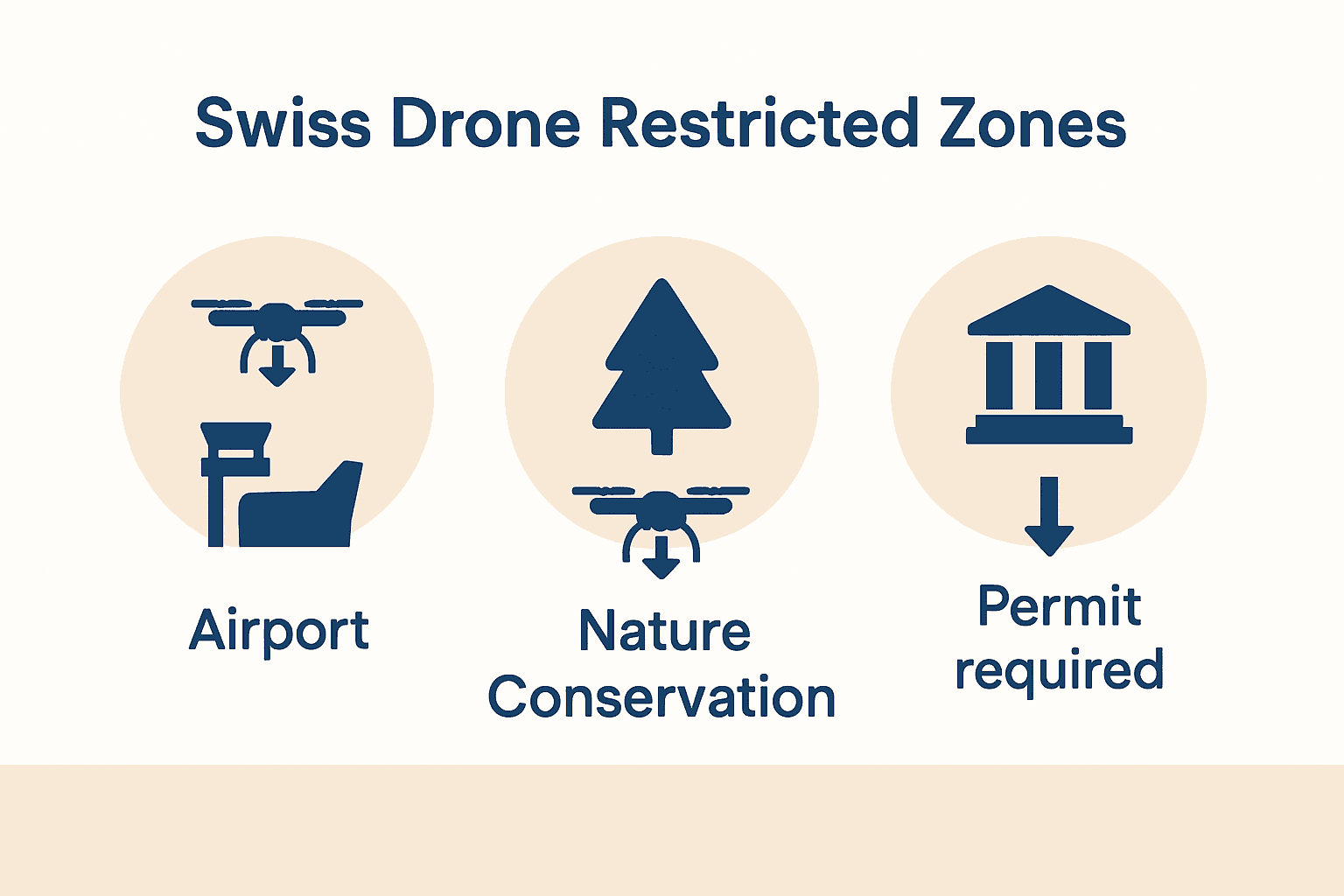
International video production teams must submit detailed flight plans, demonstrate comprehensive risk mitigation strategies, and obtain explicit permissions before conducting aerial filming in sensitive locations.
Navigation of these restricted zones demands meticulous planning and comprehensive understanding of local regulations. Professional drone operators must invest time in researching specific location restrictions, consulting local authorities, and developing robust compliance strategies. Failure to adhere to these regulations can result in significant legal penalties, equipment confiscation, and potential production delays.
Obligations, Risks, and Penalties for Breaches
Swiss drone regulations establish clear obligations and significant consequences for operators who fail to comply with established guidelines. CH.ch outlines comprehensive requirements for drone operators, emphasizing that non-compliance can result in substantial legal and financial repercussions.
Primary Compliance Obligations:
Mandatory equipment registration
Successful completion of regulatory examination
Adherence to operational category restrictions
Maintaining accurate flight documentation
Respecting privacy and safety regulations
Operating outside permitted parameters carries serious risks. bazl specifically warns that unauthorized flights in the ‘OPEN’ category, such as exceeding altitude limits or flying beyond visual line of sight, can trigger immediate penalties. These consequences may include hefty fines, potential equipment seizure, and temporary or permanent revocation of drone operating privileges.
International video production teams must recognize that regulatory compliance is not optional but a critical operational requirement. Penalties can extend beyond immediate financial sanctions, potentially impacting future production permits, professional reputation, and the ability to conduct aerial filming in Switzerland. Professional operators should invest in comprehensive training, maintain meticulous documentation, and develop a proactive approach to understanding and implementing Swiss drone regulations to mitigate potential legal risks.
Navigate Swiss Drone Regulations with Expert Video Production Support
Understanding and complying with Switzerland’s complex drone regulations can be overwhelming for international film crews. From mastering the distinct OPEN, SPECIFIC, and CERTIFIED categories to securing permits in restricted flight zones, the risks of non-compliance are high. You need a reliable local partner who not only understands the legal landscape but also manages all logistical challenges seamlessly.
At Video Production Switzerland, we specialize in delivering stress-free drone filming solutions by handling everything from permit acquisition to trusted crew sourcing and equipment management. With over 20 years of experience and intimate knowledge of local drone laws, we protect your production from costly delays and legal penalties. Do not let regulatory hurdles stall your shoot. Take the next step now and schedule a free consultation with our team to ensure your aerial filming complies fully with Swiss regulations while capturing stunning visuals.
Explore our comprehensive support at Video Production Switzerland and discover how we can help you fly legally and smoothly on your next project.
Frequently Asked Questions
What are the different drone operation categories in Switzerland?
Switzerland categorizes drone operations into three main categories: OPEN (low risk, minimal regulations), SPECIFIC (moderate risk, requires permissions), and CERTIFIED (high risk, extensive safety certifications).
What are the requirements for flying drones in the OPEN category?
To fly drones in the OPEN category, operators must register their equipment, maintain visual line of sight during flights, and adhere to altitude limitations and restrictions on flying over populated areas.
What are the key legal obligations for drone operators?
Drone operators must register their drones, complete a regulatory examination, adhere to operational category restrictions, maintain accurate flight documentation, and respect privacy and safety regulations to avoid penalties.
What are the potential penalties for non-compliance with drone regulations?
Penalties for non-compliance can include substantial fines, equipment seizure, and temporary or permanent revocation of drone operating privileges, impacting future permits and professional reputation.
Recommended
