
How to Get a Film License in Switzerland Easily

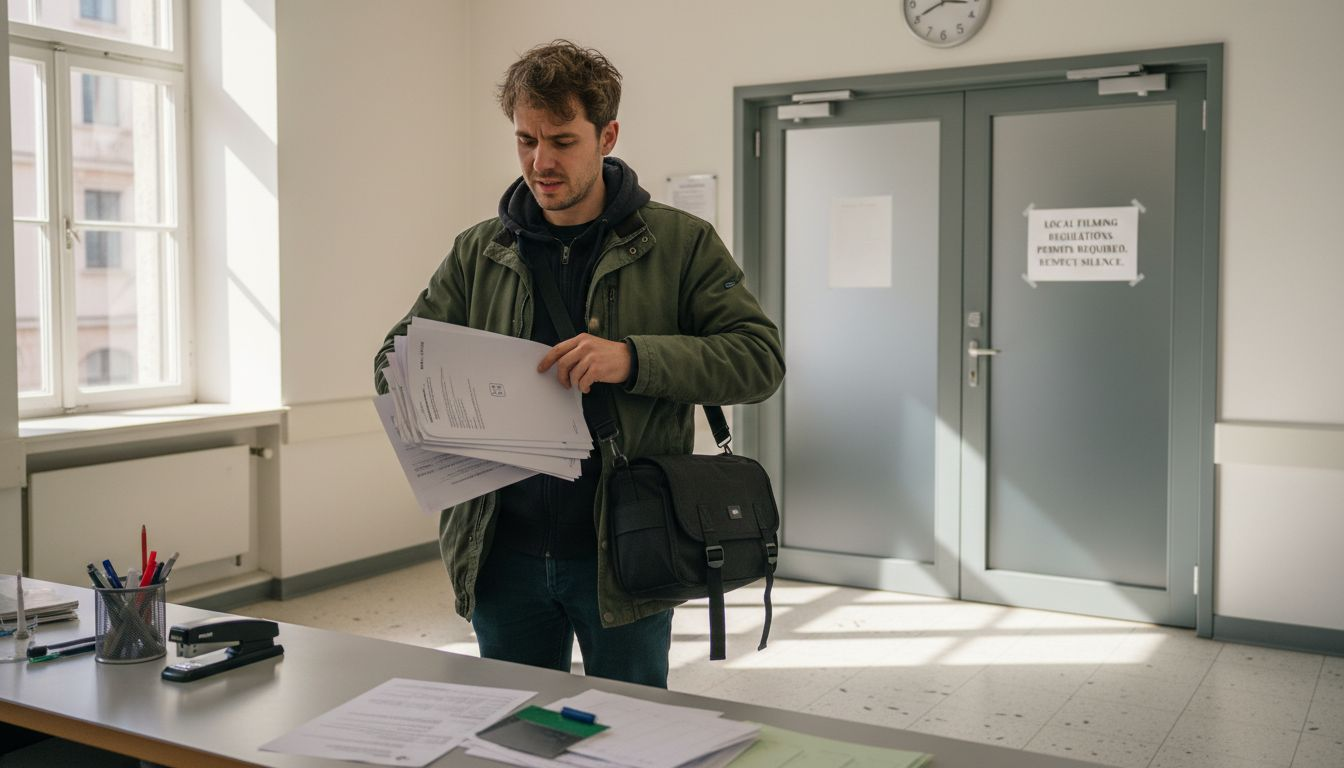
Planning a shoot in Switzerland comes with unique challenges for international filmmakers and production managers. Getting the right film licenses can be complicated due to strict local and federal regulations, including content quotas and permit protocols overseen by the Federal Office of Culture. Proper documentation and advance communication with Swiss municipal offices are required, especially for public space shoots. This guide outlines critical steps and helps you confidently manage legal, cultural, and procedural requirements for a successful Swiss film production.
Table of Contents
Quick Overview
Essential Insight | Explanation |
1. Research Local Filming Regulations | Understand permit requirements and regulations from both federal and local authorities before beginning production. |
2. Compile Comprehensive Documentation | Gather detailed documentation including schedules, maps, and insurance to support your film permit application effectively. |
3. Timely Submission of Applications | Submit film license applications ahead of deadlines: 14 days for small shoots, 6 to 12 weeks for larger projects. |
4. Maintain Communication with Authorities | Engage proactively with municipal film offices to clarify requirements and expedite the permitting process. |
5. Verify Approved Permits Thoroughly | Check all conditions, dates, and requirements in the permit to avoid any production delays or legal issues. |
Step 1: Research Swiss Filming Requirements
Researching filming requirements in Switzerland is your critical first step toward a successful production. This phase helps you understand the legal landscape and prepare comprehensive documentation for your shoot.
To begin your research, you’ll want to investigate multiple official sources. The Federal Office of Culture provides comprehensive guidelines about film production regulations in Switzerland. Key areas to focus on include:
Permit requirements for different types of productions
Local and federal filming regulations
Cultural content quotas and investment obligations
Specific rules for public space filming
Most Swiss cantons have unique local requirements, so you’ll need to check both national and regional regulations. Contact local municipal offices directly to confirm specific permit needs for your production location. Some critical considerations include:
Project scale and duration
Filming location type (public vs. private spaces)
Equipment complexity
Potential disruption to public infrastructure
Detailed preparation prevents last-minute permit complications.
For productions involving public spaces, remember that notification requirements vary based on your project’s complexity. Minor shoots with portable equipment might require minimal documentation, while larger productions need comprehensive advance notifications.
Pro tip: Always allocate extra time for permit processing and maintain open communication with local authorities to streamline your filming permissions.
Step 2: Gather Required Documentation
Gathering the correct documentation is a crucial step in securing your film permit in Switzerland. This process involves compiling a comprehensive set of materials that demonstrate your production’s scope, impact, and compliance with local regulations.
Start by preparing a detailed documentation package for public space filming. Your documentation should typically include:
Detailed filming schedule with exact dates and times
Comprehensive site plans and location maps
Description of all equipment and props
Proposed traffic and public space impact analysis
Proof of insurance coverage
Crew and production team credentials
Depending on your production’s complexity, you’ll need to assemble different levels of documentation. Smaller productions might require minimal paperwork, while larger film projects will need extensive documentation proving minimal disruption to public spaces.

Here’s a comparison of documentation needs for different production sizes in Switzerland:
Production Size | Typical Documentation Effort | Approval Likelihood |
Small Shoot | Minimal paperwork, simple site maps | High if requirements met |
Medium Production | Detailed schedules, insurance, team credentials | Moderate with proper preparation |
Large Project | Extensive plans, impact analysis, full compliance proofs | Requires thorough, early submission |
Thorough documentation demonstrates professionalism and increases your chances of permit approval.
Additionally, be prepared to show compliance with Swiss cultural production requirements. Some documentations must demonstrate local content investments and support for Swiss film production, especially for international productions.
Pro tip: Create digital and physical copies of all documentation, and always have backup files stored securely in multiple locations to prevent last-minute complications.
Step 3: Submit Your Film License Application
Submitting your film license application is the critical moment where all your research and documentation comes together. This step requires precision, attention to detail, and strategic timing to navigate Switzerland’s film permit process successfully.
When preparing to submit your public space filming application, you’ll need to be mindful of specific submission timelines. Different production scales demand different application windows:
Small shoots: Minimum 14 days prior notification
Medium productions: 4-6 weeks advance submission
Large complex projects: 6-12 weeks before filming date
Your application package should include:
Completed official permit request forms
Comprehensive location and scheduling details
Detailed equipment and crew information
Proof of insurance and liability coverage
Traffic and public space impact assessments
Accurate and complete documentation significantly improves your permit approval chances.
Most Swiss cantons have online submission portals, but some still require physical document submission. Double-check local municipal requirements for your specific filming location to ensure you’re following the correct submission protocol.
Pro tip: Always submit your application through official channels and keep digital and physical copies of all submitted documents for your records.
Step 4: Communicate with Local Authorities
Communicating effectively with local Swiss authorities is a critical component of securing your film license. This step requires strategic dialogue, transparency, and proactive engagement to navigate the complex permitting landscape successfully.
When communicating about public space filming, you’ll need to engage multiple cantonal offices with precision and clarity. Your communication strategy should include:
Initial contact with municipal film office
Detailed explanation of production scope
Comprehensive impact assessment disclosure
Specific logistical request breakdowns
Open channels for potential modifications
Research the specific contact person for film permits
Prepare a clear, concise communication packet
Schedule preliminary consultation meetings
Be responsive to additional information requests
Maintain professional and courteous interactions
Transparent communication builds trust with local authorities and smooths your permitting process.
Key communication channels typically include email, official municipal portals, and sometimes in-person meetings. Be prepared to provide additional documentation if requested, and always maintain a collaborative approach.
Pro tip: Keep a professional communication log documenting all interactions with local authorities, including dates, contact names, and key discussion points.
Step 5: Verify and Secure Your Approved License
Verifying and securing your approved film license represents the final critical checkpoint in your Swiss filming permissions process. This step ensures all regulatory requirements are met and your production can proceed without unexpected legal complications.
When verifying public space filming permits, you’ll need to carefully review the official documentation for specific operational conditions. Your verification process should include:
Reviewing all permit conditions thoroughly
Confirming exact filming dates and locations
Checking specific operational restrictions
Validating insurance and liability coverage
Understanding potential penalty clauses
Request official written permit confirmation
Cross-reference permit details with original application
Verify compliance with all listed conditions
Store digital and physical copies securely
Confirm point of contact for potential modifications
Meticulous verification prevents potential production delays and legal challenges.
Key verification elements typically include examining the exact permissions granted, understanding any time-sensitive restrictions, and ensuring your production meets all specified regulatory requirements. Maintain open communication channels with the issuing authority for any last-minute clarifications.
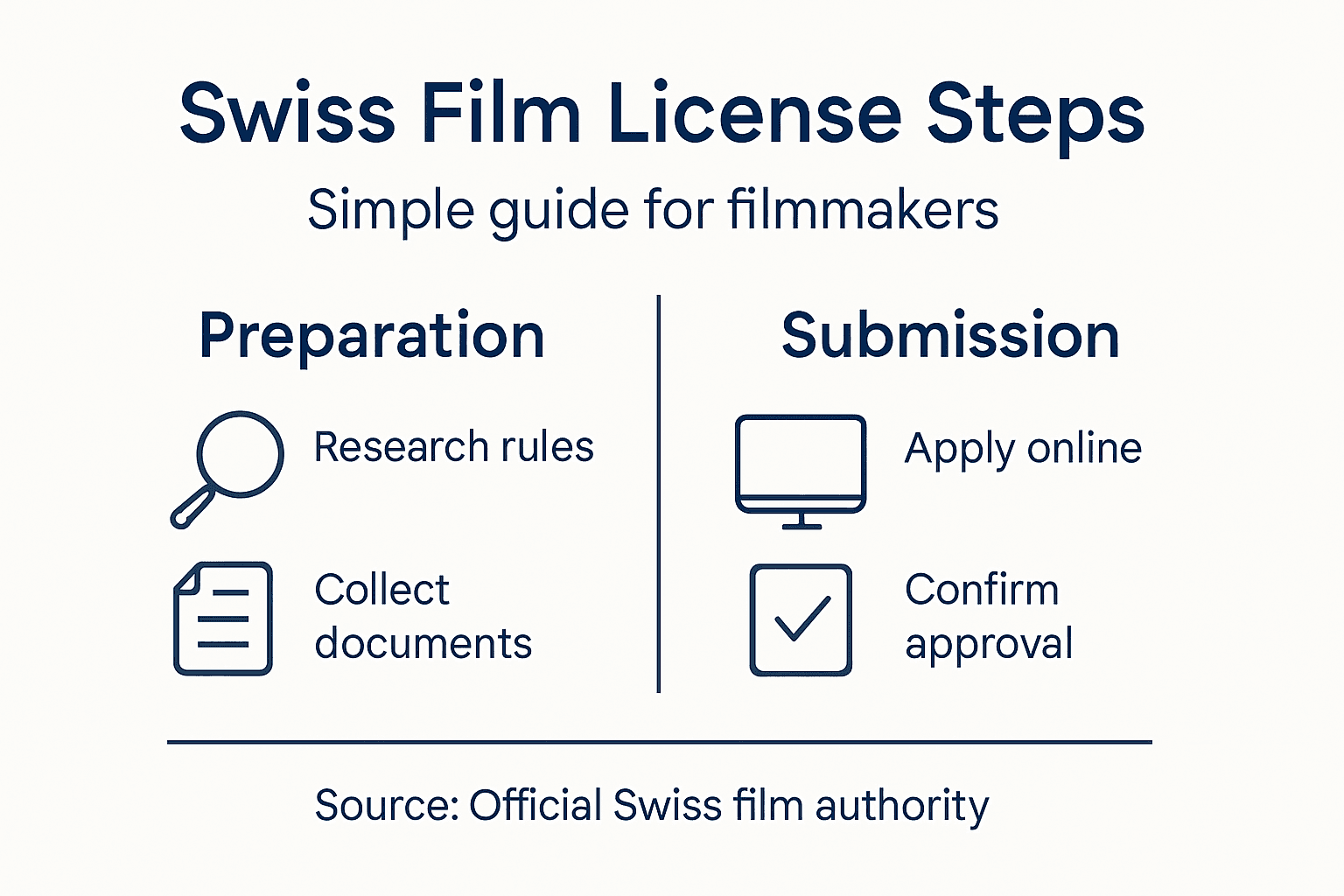
Below is a summary of permit verification steps and their practical impact:
Verification Step | Outcome for Filmmaker |
Review all conditions | Avoids prohibited activities |
Confirm dates/locations | Prevents scheduling mistakes |
Validate insurance | Ensures liability compliance |
Store documents safely | Provides backup if required |
Identify contact point | Eases fast issue resolution |
Pro tip: Create a comprehensive checklist of permit conditions and review it with your entire production team to ensure universal understanding and compliance.
Simplify Your Swiss Film Permit Process with Expert Local Support
Navigating the complex film licensing requirements in Switzerland can feel overwhelming. From understanding permit conditions and compiling thorough documentation to meeting strict submission deadlines and maintaining clear communication with local authorities every step demands precision and local insight. If you want to avoid last-minute permit complications and ensure your production complies fully with Swiss regulations, expert guidance is essential.
VideoProductionSwitzerland.com offers trusted, professional support to take the stress out of your film license application. With over 20 years of experience, our team provides reliable assistance by handling permit acquisition, local crew sourcing, equipment logistics, and location scouting in one seamless package. We excel at managing the detailed preparation and communication you need for smooth approvals and uninterrupted filming.
Ready to turn your filming plans in Switzerland into reality without the hassle of permit delays or coordination headaches? Visit our landing page to request your free initial consultation. Start your production journey with confidence, backed by expert local support that understands all the nuances of securing film licenses in Switzerland.
Frequently Asked Questions
What are the initial steps to get a film license in Switzerland?
To get a film license in Switzerland, start by researching filming requirements on official websites, particularly the Federal Office of Culture. Gather necessary documentation, including schedules, site plans, and proof of insurance, to ensure you meet local regulations and permit criteria.
How far in advance should I submit my film license application for small shoots?
For small shoots, you should submit your film license application at least 14 days prior to your filming dates. This ensures you can meet all local requirements and receive the necessary approvals on time.
What types of documentation do I need for larger film productions?
Larger film productions require extensive documentation, including a detailed filming schedule, location maps, equipment descriptions, and impact assessments. Prepare to provide proof of insurance and credentials for your crew to comply with regulatory standards.
How can I communicate effectively with local authorities about my film project?
To communicate effectively with local authorities, initiate contact with the municipal film office and clearly explain your production’s scope. Be prepared to provide detailed information and maintain open channels for any additional requests or discussions.
What should I do after receiving my approved filming license?
After receiving your approved filming license, carefully review all conditions outlined in the permit. Confirm key details like filming dates and locations, and ensure compliance with all requirements to avoid potential production delays.
How can I verify that my film license is in good standing?
You can verify your film license by reviewing all permit conditions and confirming details with the issuing authority. Store digital and physical copies of your permit safely to ensure easy access and reference during your production.
Recommended
