
How to Manage Client Expectations Effectively in 2025


Clients always say they want clear communication and no surprises when they hire you for a project. But the real surprise is that hidden expectations can sink a project before it even starts and most issues come from vague goals or assumptions that no one actually talks about. Defining hyper specific objectives with tools like a ‘Project Objectives Document’ unlocks a whole different level of trust and success that most teams never see—because the real deal is in those overlooked details that make all the difference.
Table of Contents
Quick Summary
Key Point | Explanation |
1. Define Clear Objectives | Establish precise project goals to set clear expectations. Use detailed descriptions to avoid ambiguity. |
2. Communicate Regularly | Schedule consistent updates to keep all stakeholders informed. Transparency helps to prevent misunderstandings and build trust. |
3. Set Realistic Timelines and Budgets | Break projects into measurable tasks with realistic estimates to prevent scope creep and exceed client expectations. |
4. Anticipate Challenges | Conduct a thorough risk assessment to identify potential obstacles. Prepare mitigation strategies to manage unforeseen issues proactively. |
5. Solicit and Implement Feedback | Encourage client input throughout the project. Actively integrate feedback to refine processes and improve collaboration. |
Step 1: Define Clear Project Objectives
Defining clear project objectives is the foundational step in managing client expectations effectively. Without precise, articulated goals, projects can quickly derail, leading to misunderstandings, frustration, and potential failure. This crucial initial phase sets the entire project’s trajectory and provides a roadmap for success.
Begin by scheduling a comprehensive discovery meeting with your client to deeply understand their core expectations, desired outcomes, and specific project requirements. During this conversation, ask probing questions that reveal not just surface level needs, but underlying motivations and potential challenges. Clients often have unstated expectations that emerge through careful, strategic questioning. Explore their past experiences, potential concerns, and precise vision for the project.
Document every discussed objective with extreme specificity. Instead of vague statements like “create a marketing video,” articulate precise parameters such as “develop a three minute brand narrative video targeting millennials, highlighting our company’s sustainability initiatives, to be used across digital platforms including Instagram, YouTube, and LinkedIn.” This level of granular detail eliminates ambiguity and provides a clear benchmark for project success.
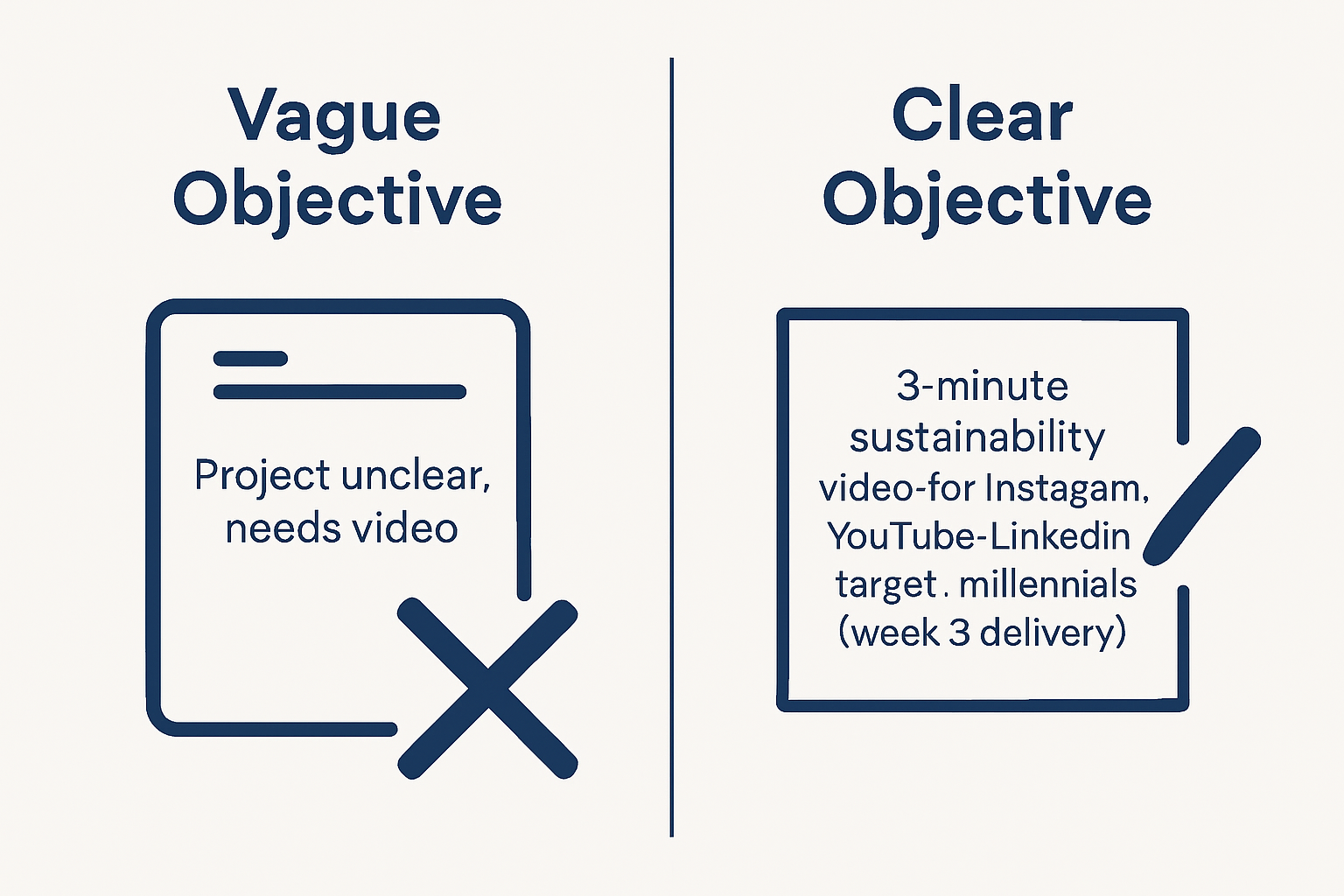
Create a formal “Project Objectives Document” that serves as a binding agreement between you and the client. This document should outline measurable, time bound goals that can be objectively evaluated. Include specific metrics, deadlines, deliverables, and potential contingencies. Learn more about crafting comprehensive project documentation to ensure crystal clear communication.
Verify client understanding by requesting they review and sign off on the objectives document. This collaborative approach not only ensures alignment but also demonstrates your commitment to transparency and client satisfaction. Confirm that each objective is SMART: Specific, Measurable, Achievable, Relevant, and Time bound. This framework transforms abstract desires into concrete, actionable project goals that provide mutual clarity and direction.
Step 2: Communicate Regularly with Clients
Regular communication forms the backbone of successful client relationship management. This critical step transforms initial project objectives into a living, dynamic collaboration that keeps all stakeholders aligned and informed throughout the project lifecycle. Effective communication prevents misunderstandings, reduces potential conflicts, and builds trust between you and your client.
Establish a structured communication rhythm that balances frequency with meaningful interaction. Schedule consistent check in meetings at predefined intervals - weekly video conferences, bi weekly email updates, or monthly comprehensive progress reports. During these interactions, provide transparent insights into project status, potential challenges, and anticipated milestones. Proactive communication prevents surprises and demonstrates professional commitment. Select communication channels that work best for your client, whether that means professional project management platforms, email threads, or dedicated messaging systems.
Explore advanced client communication strategies to elevate your professional interactions. When discussing project progress, focus on delivering clear, concise updates that connect directly to the original project objectives. Translate technical details into language that resonates with your client’s business goals. If potential delays or complications emerge, communicate them immediately with proposed solutions. Clients appreciate honesty and strategic problem solving far more than attempting to hide or minimize challenges.
Develop a communication log to track all interactions, decisions, and agreements. This documentation serves multiple purposes: it provides a historical record of project evolution, helps manage expectations, and offers protection in case of potential disputes. Confirm client understanding by requesting acknowledgment of each significant update. This verification step ensures that both parties remain synchronized and provides an opportunity for immediate clarification of any potential misunderstandings. Remember, consistent, transparent communication is not just about sharing information it is about building a collaborative partnership that drives successful project outcomes.
The following table organizes different communication methods mentioned in the article, helping you select the most appropriate channel for keeping clients informed and engaged.
Communication Method | Description | Recommended Use |
Video Conferences | Live, interactive meetings | Weekly or milestone updates |
Email Updates | Written status summaries | Bi-weekly or for concise check-ins |
Progress Reports | Formal documentation of project status | Monthly or major phase completions |
Project Management Tools | Interactive dashboards and logs | Real-time tracking and documentation |
Messaging Systems | Quick, informal communication | Minor clarifications or urgent issues |
Step 3: Set Realistic Timelines and Budgets
Establishing realistic timelines and budgets is a critical component of managing client expectations effectively. This step transforms project objectives into tangible, actionable plans that provide clarity and prevent potential misunderstandings. Precision and transparency are your most valuable tools when crafting project timelines and financial parameters.
Begin by breaking down the entire project into granular, measurable components. Each task should have a specific duration, required resources, and associated costs. Use project management tools that allow detailed tracking and visualization of project milestones. Discover expert strategies for production time management to enhance your planning process. When estimating timelines, incorporate buffer periods that account for potential complications, unexpected challenges, or client feedback iterations. **A good rule of thumb is to add 15 to 20 percent additional time to your initial estimated project duration.
**
Budget development requires meticulous attention to detail. Document every potential expense, including direct costs like personnel, equipment, and materials, as well as indirect costs such as administrative overhead, potential revisions, and contingency funds. Be transparent about how each budget line item connects to project deliverables. Avoid the temptation to lowball initial estimates to win the project. Instead, provide a comprehensive, realistic budget that demonstrates your understanding of the project’s complexity. This approach builds trust and prevents future conflicts.
Create a formal document that outlines the project timeline and budget, including clear explanations for each estimate. Schedule a detailed review meeting with the client to walk through these parameters, allowing them to ask questions and provide input. This collaborative approach ensures mutual understanding and gives clients an opportunity to adjust scope if needed. Remember that realistic timelines and budgets are not just about numbers they are about building a foundation of trust and professional credibility. By presenting well researched, transparent project parameters, you set the stage for a successful collaboration that meets or exceeds client expectations.
To help you implement the steps for managing client expectations, here is an overview table summarizing each phase with its objectives and key output.
Step | Objective | Key Output |
1. Define Clear Project Objectives | Establish specific, mutual goals | Project Objectives Document |
2. Communicate Regularly | Keep stakeholders aligned | Communication Rhythm & Log |
3. Set Realistic Timelines/Budgets | Provide detailed, actionable plans | Timeline & Budget Document |
4. Anticipate Challenges | Proactively manage risks | Risk Assessment & Mitigation Plan |
5. Provide Progress Updates | Ensure transparency and trust | Regular Progress Reports/Updates |
6. Solicit Feedback | Drive continuous improvement | Integrated Feedback Mechanism |
Step 4: Anticipate and Address Potential Challenges
Anticipating and addressing potential challenges is a strategic approach that transforms reactive problem solving into proactive risk management. This critical step involves developing a comprehensive understanding of potential obstacles before they emerge, creating a robust framework for managing unexpected complications that could derail project success.
Develop a comprehensive risk assessment strategy that systematically identifies potential challenges across every project dimension. Begin by conducting a thorough analysis of previous similar projects, examining historical pain points, common bottlenecks, and potential technical or interpersonal complications. Create a detailed risk matrix that categorizes potential challenges by their likelihood of occurrence and potential impact. Learn more about strategic project risk management to enhance your anticipation techniques. For each identified risk, develop a specific mitigation strategy that outlines precise steps to prevent or minimize potential negative outcomes.
Communicate these potential challenges transparently with your client during the initial project planning stages. Proactive communication builds trust and demonstrates professional expertise. Present your risk assessment not as a list of potential problems, but as a strategic roadmap that showcases your comprehensive understanding of the project landscape. Discuss each potential challenge openly, explaining not just the risk, but your prepared mitigation strategies. This approach transforms potential concerns into confidence building discussions that position you as a strategic partner rather than just a service provider.
Establish a dynamic monitoring system that allows for real time risk tracking and immediate response. Implement regular check in points where you and your team can reassess the risk landscape, updating your mitigation strategies as the project evolves. Flexibility is key in managing unexpected challenges. Maintain open communication channels with your client, ensuring they are informed about any emerging risks and the steps being taken to address them. By presenting challenges as opportunities for collaborative problem solving, you convert potential points of friction into moments that demonstrate your commitment to project success and client satisfaction.
Step 5: Provide Transparent Progress Updates
Transparent progress updates are the cornerstone of maintaining client trust and managing expectations throughout a project lifecycle. This critical step transforms complex project dynamics into clear, comprehensible narratives that keep clients informed, engaged, and confident in your professional capabilities.
Develop a structured communication framework that provides consistent, meaningful updates across multiple channels. Choose communication methods that align with your client’s preferences, which might include detailed email reports, interactive dashboard access, or scheduled video conference briefings. Explore advanced communication strategies to enhance your update approach. Create a standardized progress report template that captures key metrics, completed milestones, upcoming tasks, and potential challenges. Transparency means showcasing both achievements and potential obstacles. Your updates should provide a holistic view of the project’s current status, highlighting not just what has been accomplished, but also explaining the strategic reasoning behind each completed phase.
Implement a visual tracking system that allows clients to understand progress intuitively. Utilize project management tools that offer real time progress indicators, milestone tracking, and percentage completion metrics. When presenting updates, contextualize the raw data by explaining how each completed task contributes to the overall project objectives. Be proactive in addressing potential delays or complications. If a timeline shift becomes necessary, communicate this immediately, providing a comprehensive explanation of the reasons, potential impact, and proposed mitigation strategies. This approach demonstrates professional accountability and transforms potential points of friction into opportunities to showcase your problem solving capabilities. By consistently delivering clear, honest, and detailed progress updates, you not only manage client expectations but also build a foundation of trust that can lead to long term professional relationships.

Step 6: Solicit Feedback and Adjust Expectations
Soliciting feedback and adjusting expectations is the critical final step in creating a responsive, client centered project management approach. This process transforms static project parameters into a dynamic, collaborative experience that demonstrates your commitment to continuous improvement and client satisfaction.
Develop a structured feedback mechanism that encourages honest, comprehensive client input throughout the project lifecycle. Design multiple feedback channels that accommodate different communication preferences, including formal survey tools, informal video conference discussions, and periodic written evaluation opportunities. Learn more about effective communication strategies to enhance your feedback collection process. Create evaluation frameworks that go beyond simple satisfaction ratings, asking specific questions about project execution, communication effectiveness, and areas for potential improvement. Approach feedback as a two way dialogue, not a one sided assessment. This means being prepared to listen actively, reflect genuinely, and demonstrate tangible actions based on the insights received.
Implement a systematic approach to integrating client feedback into your ongoing project management strategy. When receiving critical input, resist the natural defensive impulse and instead view each comment as an opportunity for growth and refinement. Document every piece of feedback, categorize it by potential impact, and develop clear action plans for addressing significant observations. Transparency is key in this process. Communicate back to the client how their feedback has influenced project adjustments, showing them that their input is valued and directly contributes to project evolution. By creating a feedback loop that transforms client perspectives into actionable improvements, you not only manage expectations but actively shape them, building a collaborative partnership that extends far beyond the current project’s scope.
Elevate Your Expectations with Seamless Swiss Video Production
Managing client expectations is challenging when your project involves international logistics and unfamiliar environments. You already know that unclear objectives, unpredictable timelines, or missed updates can create costly misunderstandings and strain relationships. The article has shown that clarity, consistent communication, and proactive risk management are critical to your success.
Imagine having a trusted Swiss partner who handles every detail so you can focus on your creative vision. At Video Production Switzerland, we turn best practices like transparent progress updates and milestone tracking into daily reality. Our team anticipates challenges, pinpoints solutions, and keeps you informed at every step. Ready for smooth, stress-free shoots backed by over 20 years of expertise?
Take the next step and book your complimentary consultation. Discover how our proven process aligns with your project’s needs and delivers the clarity, reliability, and partnership you deserve. Start planning with confidence today at https://videoproductionswitzerland.com.
Frequently Asked Questions
What are the key steps to manage client expectations effectively?
Managing client expectations effectively involves six key steps: defining clear project objectives, communicating regularly with clients, setting realistic timelines and budgets, anticipating and addressing potential challenges, providing transparent progress updates, and soliciting feedback to adjust expectations.
How can I define clear project objectives with a client?
Begin by scheduling a discovery meeting to understand your client’s expectations and outcomes. Ask strategic questions to uncover unstated needs, and document specific, measurable, achievable, relevant, and time-bound (SMART) goals in a Project Objectives Document to ensure clarity and mutual agreement.
What communication strategies can I employ to keep clients updated throughout a project?
Establish a structured communication rhythm by scheduling regular check-ins, either through meetings or progress reports. Utilize the client’s preferred communication channels and maintain a communication log to track interactions. Focus on clear and concise updates that connect directly to the project’s objectives.
Why is it important to solicit feedback from clients during a project?
Soliciting feedback allows for continuous improvement and helps to adjust expectations effectively. By creating a structured feedback mechanism, you can encourage open dialogue, document insights, and demonstrate that client input leads to tangible project adjustments, thus enhancing satisfaction and collaboration.
Recommended
