
Understanding Team Communication Best Practices for Filmmakers

Films take entire teams of creative minds and technical experts working together, and the outcome depends almost entirely on how well everyone communicates.
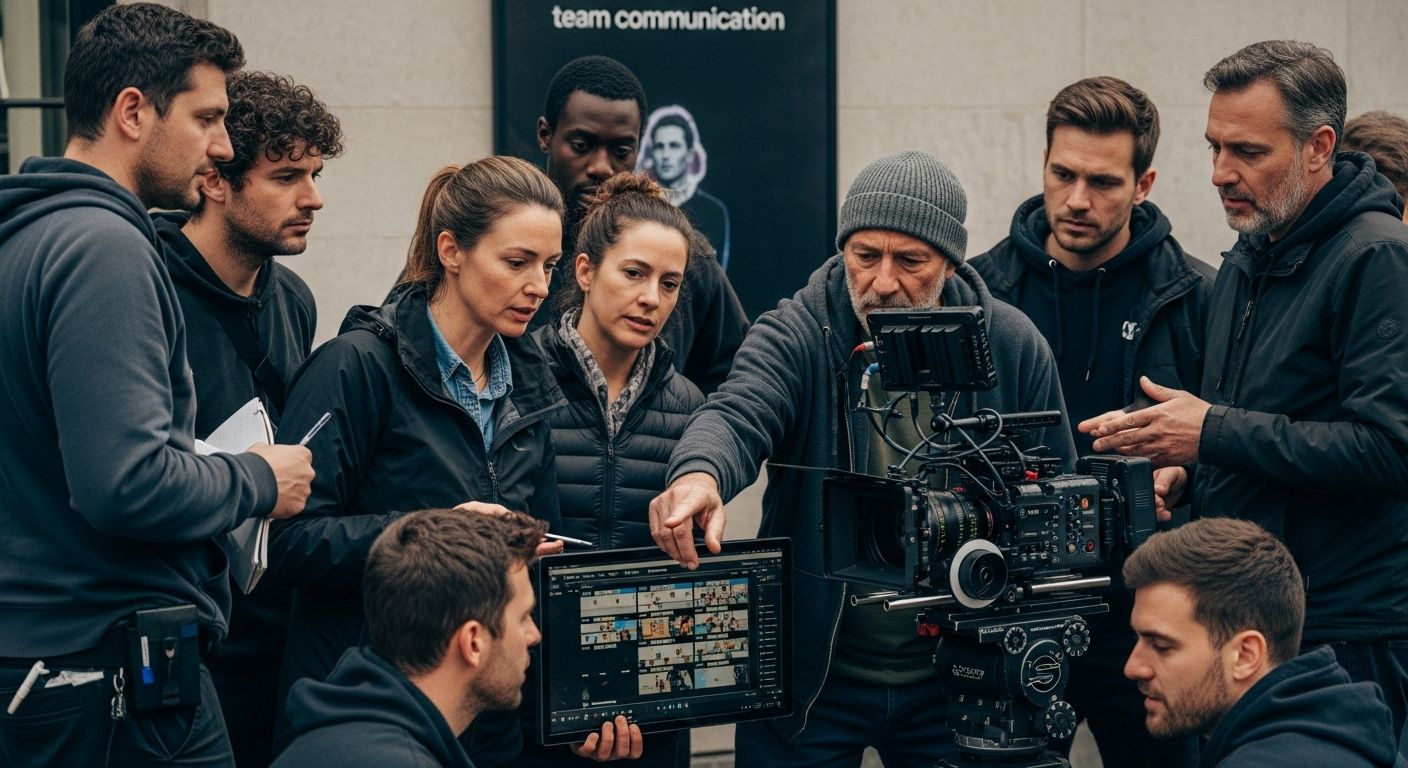
But get this. A single breakdown in team communication can lead to costly reshoots or even bring a project to a halt, sometimes wasting thousands of dollars in a matter of hours. Most people think fancy cameras or big budgets make or break a film, but it is actually the conversations happening behind the scenes that decide whether a vision turns into movie magic or falls apart quietly.
Table of Contents
Quick Summary
Takeaway | Explanation |
Communication is vital for film success. | Clear communication reduces misunderstandings and prevents costly mistakes during production. |
Establish a robust communication framework. | Create protocols and preferred channels to facilitate effective information sharing among team members. |
Foster a culture of open communication. | Encourage team members to share ideas freely, leading to enhanced collaboration and creativity. |
Use appropriate communication tools. | Select digital platforms that support seamless collaboration and project management to enhance efficiency. |
Promote active and empathetic listening. | Listening attentively to team members fosters a respectful environment and improves overall team performance. |
The Essentials of Team Communication in Film Projects
Team communication represents the foundation of successful film production, determining whether a project will smoothly progress or become mired in misunderstandings and conflicts. Unlike traditional workplace environments, film sets demand dynamic, instantaneous communication across multiple departments, each with unique responsibilities and creative perspectives.
Understanding Communication Dynamics in Film Production
Film production represents an intricate collaborative ecosystem where communication isn’t just about exchanging information, but creating a shared vision. Communication failures can derail entire projects, resulting in costly reshoots, missed deadlines, and interpersonal tensions. Effective team communication requires understanding the nuanced interaction between creative vision, technical execution, and logistical constraints.
Key communication challenges in film production include:
Coordinating between multiple departments with distinct technical languages
Managing rapidly changing production schedules
Translating creative concepts into actionable technical instructions
Maintaining clear hierarchical communication channels
Building a Communication Framework
Successful film teams develop robust communication frameworks that transcend traditional hierarchical models. This involves creating clear communication protocols, establishing preferred communication channels, and fostering an environment of mutual respect and open dialogue. Learn more about optimizing team workflows to enhance overall production efficiency.
To help you quickly compare some of the most important challenges, elements, and solutions in film team communication, the following table summarizes common communication challenges in film production, the associated impact, and recommended solutions.
Communication Challenge | Impact on Production | Recommended Solution |
Departmental technical language differences | Misunderstandings, delays | Establish shared terminology; briefings |
Rapidly changing production schedules | Missed deadlines, confusion | Daily updates; flexible frameworks |
Translating creative ideas to technical tasks | Misaligned execution, rework | Clear instructions; follow-up discussions |
Hierarchical communication breakdowns | Bottlenecks, lack of clarity | Defined channels; open dialogue |
Effective communication in film production requires several critical elements:
Establishing daily briefing and update sessions
Using standardized communication tools and platforms
Creating detailed communication documentation
Developing active listening skills across all team levels
Understanding team communication best practices means recognizing that successful filmmaking is fundamentally a collaborative art form where clear, respectful, and efficient communication transforms individual talents into collective cinematic achievement.
Why Clear Communication Matters in Creative Teams
Clear communication transforms creative teams from disconnected groups into synchronized powerhouses capable of achieving extraordinary results. In the complex landscape of collaborative media production, communication is not merely a technical skill but a strategic asset that determines project success.
The Impact of Communication on Creative Collaboration
Creative teams operate within intricate dynamics where individual talents must seamlessly integrate into a collective vision. Miscommunication can quickly derail even the most promising projects, creating bottlenecks, misunderstandings, and potential creative conflicts. Explore strategies for enhancing team creativity to understand how effective communication drives innovation.
According to research from the Journal of Effective Teaching in Higher Education, effective communication dramatically influences team performance by:
Reducing interpersonal friction
Accelerating problem solving
Enhancing collective creative output
Maintaining project momentum
Building a Communication Culture
Successful creative teams cultivate a communication culture that prioritizes transparency, respect, and mutual understanding. This involves creating environments where team members feel empowered to share ideas, provide constructive feedback, and collaborate without fear of judgment.
Key elements of effective communication in creative teams include:
Active and empathetic listening
Clear and concise articulation of ideas
Openness to diverse perspectives
Constructive and respectful dialogue
Ultimately, clear communication in creative teams is about creating a shared language that transcends individual perspectives, enabling collective creativity to flourish and transform innovative concepts into remarkable collaborative achievements.
Key Principles of Effective Team Communication
Effective team communication represents a sophisticated interplay of skills, strategies, and psychological understanding that goes far beyond simple information exchange. In film production, communication is the invisible infrastructure that supports creative collaboration, ensuring complex projects move from conceptual vision to tangible reality.
The Foundations of Communication Excellence
At its core, effective communication is about creating shared understanding. According to research on professional communication skills, approximately 75 to 80 percent of professional work involves some form of communication. This statistic underscores the critical importance of developing robust communication strategies that transcend basic information transfer.
The fundamental principles of communication in creative teams include:
Clarity of message and intent
Active and empathetic listening
Respect for diverse perspectives
Timely and contextual information sharing
Implementing Communication Strategies
Successful communication strategies in film production require a multifaceted approach that considers both technical and interpersonal dynamics. Learn more about enhancing team productivity to complement your communication framework.
Below is a table organizing core principles of effective team communication referenced in the article, providing a concise overview of each principle and its practical benefit in creative collaboration.
Principle | Description | Practical Benefit |
Clarity of message and intent | Clearly express ideas and expectations | Reduces errors and confusion |
Active and empathetic listening | Attentively listen and acknowledge team input | Builds trust; improves team cohesion |
Respect for diverse perspectives | Value differing viewpoints and experiences | Encourages innovation and creativity |
Timely and contextual information | Share relevant updates and data promptly | Maintains project momentum |
Key communication strategies for creative teams involve:
Establishing clear communication protocols
Using appropriate communication technologies
Creating safe spaces for open dialogue
Developing shared communication expectations
Understanding team communication best practices means recognizing that effective communication is not about perfect transmission of information, but about creating a collaborative environment where ideas can be shared, challenged, and refined collectively. It transforms individual talents into a synchronized creative force capable of achieving extraordinary artistic outcomes.
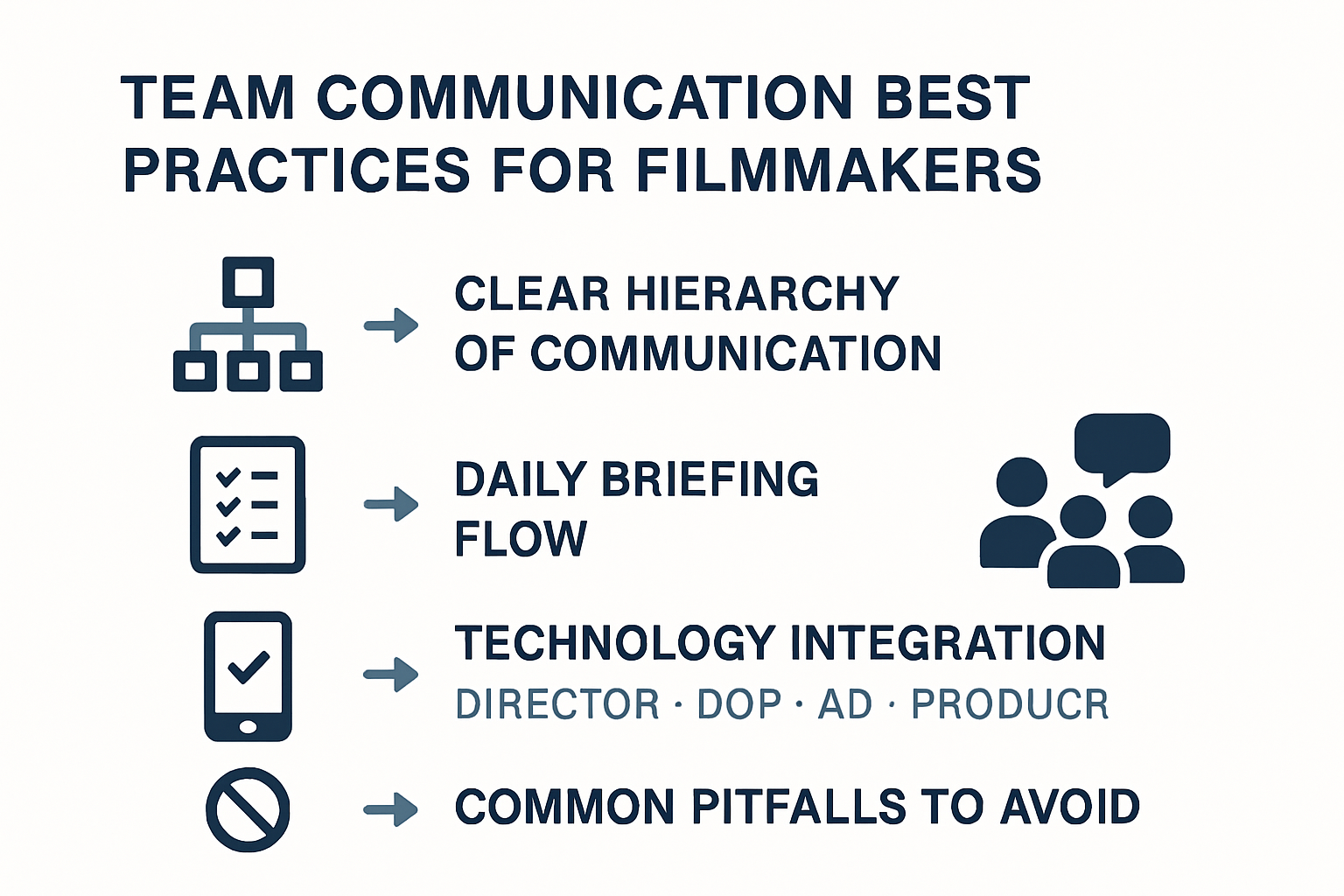
Understanding Communication Tools and Their Uses
In the rapidly evolving landscape of film production, communication tools have transformed from simple radio systems to sophisticated digital platforms that enable real time collaboration and information sharing. Technology now serves as the critical nervous system of creative teams, connecting individuals across different roles, locations, and time zones.
Digital Platforms and Collaborative Technologies
Modern film production demands communication tools that go beyond traditional methods, offering seamless integration of project management, real time messaging, and collaborative documentation. Research from industry communication studies highlights the significance of selecting appropriate digital platforms that support complex creative workflows.
Key digital communication tools for film teams include:
Project management software with integrated communication channels
Cloud based document sharing platforms
Real time messaging applications
Video conferencing tools with screen sharing capabilities
Strategic Tool Selection and Implementation
Selecting the right communication tools requires understanding team dynamics, project complexity, and specific production requirements. Explore strategies for team productivity to complement your communication technology approach.
Considerations for effective tool implementation:
Compatibility across different devices and operating systems
User friendly interfaces
Strong security and data protection features
Scalability for different project sizes
Understanding communication tools is not just about technological adoption, but about creating an ecosystem that enhances collaboration, reduces misunderstandings, and empowers creative teams to work with unprecedented efficiency and connectivity.
Building a Culture of Open Communication in Media Production
Creating a culture of open communication represents more than implementing protocols or technologies. It is a comprehensive approach that fundamentally transforms how creative teams interact, collaborate, and solve challenges. Open communication is the cornerstone of innovative and resilient media production environments.
Psychological Safety and Team Dynamics
Open communication begins with establishing psychological safety, where team members feel empowered to share ideas, express concerns, and challenge existing perspectives without fear of retribution. Learn more about enhancing team productivity to understand how communication impacts overall team performance.
Key elements of psychological safety include:
Creating non judgmental discussion spaces
Encouraging vulnerability and authentic dialogue
Valuing diverse perspectives and experiences
Normalizing constructive feedback
Implementing Organizational Communication Practices
Transforming communication culture requires deliberate, systemic approaches that go beyond individual interactions. Leaders must model transparency, actively listen, and create structured opportunities for meaningful exchange.
Strategic practices for building open communication include:
Regular team retrospective meetings
Anonymous feedback mechanisms
Cross departmental collaboration sessions
Leadership transparency and vulnerability
Building a culture of open communication is an ongoing journey that requires commitment, patience, and continuous learning. It transforms media production from a transactional process into a dynamic, collaborative ecosystem where creativity can truly flourish.
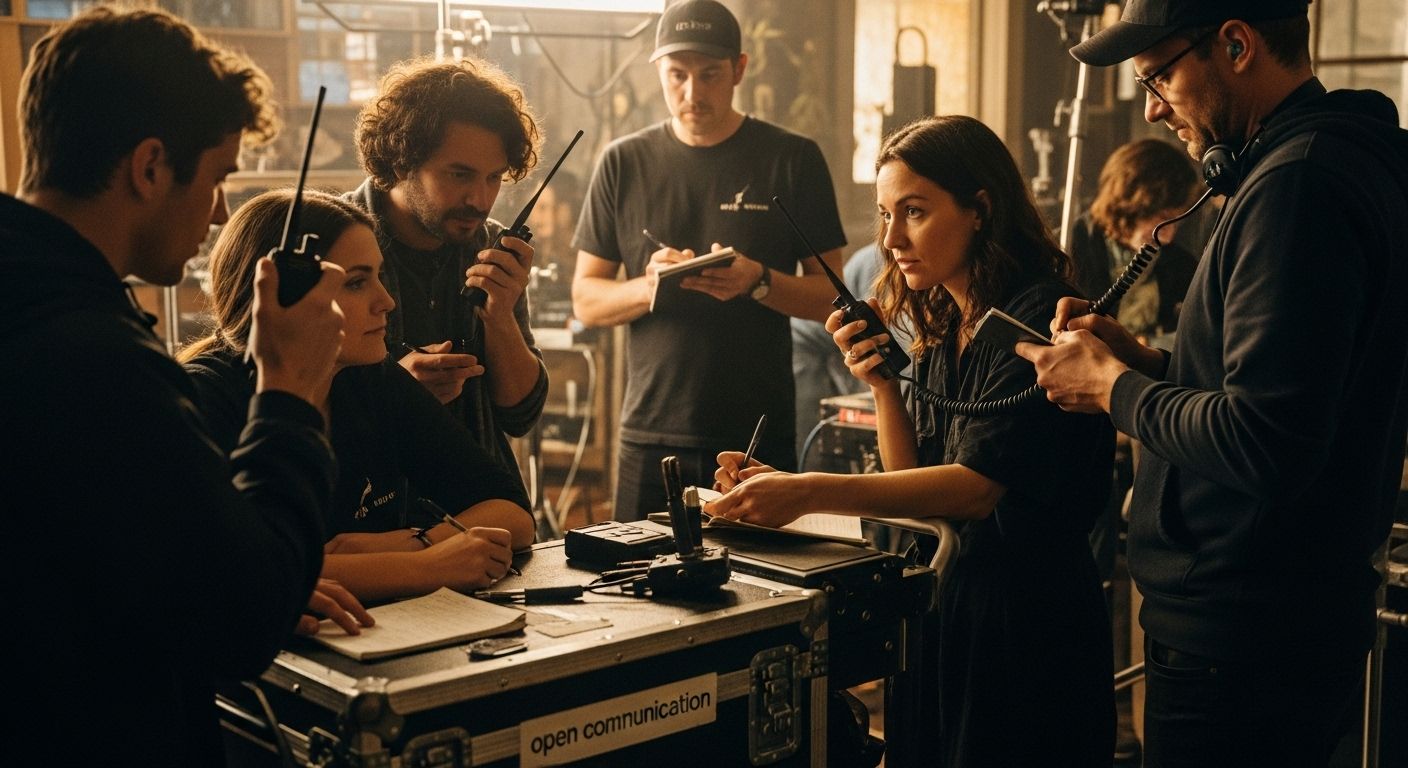
Take the Stress Out of Team Communication in Swiss Film Productions
Struggling to keep your creative vision clear while juggling communication across teams, vendors, and locations? This article outlined how miscommunication and logistical chaos can derail even the most promising projects. Whether you need to translate creative directives into actionable plans or prevent costly delays, building a seamless communication framework is essential. Our clients trust Video Production Switzerland because we specialize in eliminating those classic pain points highlighted above. From securing permits to managing crew and gear, our local experts ensure your instructions are understood and executed—every step, every day.
Turn industry best practices into real results with our proven on-the-ground team. Let us handle the details so your production can focus on creativity, not crisis control. Book your free production consultation at Video Production Switzerland and experience the ease of working with a reliable partner that empowers smooth, transparent communication. Act now to guarantee your next shoot in Switzerland stays on schedule and stress free.
Frequently Asked Questions
What are the key components of effective communication in film production?
Effective communication in film production includes clarity of message, active listening, respect for diverse perspectives, and timely sharing of information to support collaborative efforts.
How can I build a culture of open communication in my film team?
To build a culture of open communication, create non-judgmental discussion spaces, encourage vulnerability, value different perspectives, and implement regular feedback mechanisms.
What communication tools are essential for film production teams?
Essential communication tools for film production teams include project management software with integrated communication channels, cloud-based document sharing platforms, real-time messaging applications, and video conferencing tools.
How do I enhance communication in a rapidly changing production environment?
Enhancing communication in a rapidly changing production environment involves establishing daily briefings, using standardized communication tools, and creating a robust framework for information sharing that adapts to shifting schedules.
Recommended
