
What Is a Production Manager? Complete Overview


Most people underestimate how much a skilled production manager shapes what we see on screen or use every day. Behind every seamless project is someone who handles not just schedules, but also budget pressures and high expectations. Effective production managers can reduce waste by as much as 20 percent while keeping quality high and deadlines on track. Understanding what this role truly involves clears up common myths and reveals just how vital these experts are for creative and manufacturing success.
Table of Contents
Key Takeaways
Point | Details |
Role of Production Manager | Production managers oversee production processes, ensuring efficiency, quality, and operational workflow across various industries. |
Skills Required | A successful production manager needs a blend of technical expertise, excellent communication, and strong problem-solving abilities. |
Common Challenges | Key challenges include balancing cost control with quality standards, managing equipment failures, and maintaining effective team communication. |
Career Pathways | Aspiring production managers typically start in junior roles and advance through experience and continuous professional development. |
Production Manager Defined: Core Concepts and Myths
A production manager is a strategic professional responsible for overseeing and coordinating complex manufacturing or creative processes, ensuring efficiency, quality, and smooth operational workflow. According to Prospects, production managers are critical in planning and organizing production schedules while assessing project and resource requirements.
The role encompasses multiple critical dimensions. In media and film production, a production manager handles logistical planning, budget management, crew coordination, and operational execution. In manufacturing, they focus on optimizing production lines, managing resources, and maintaining strict quality control standards. Coursera highlights that production management fundamentally involves ensuring products are produced efficiently, on schedule, within budget, and meeting established quality benchmarks.
Common myths about production managers often mischaracterize their responsibilities. Contrary to popular belief, production managers are not just administrative coordinators but strategic problem solvers who must:
Anticipate potential production challenges
Balance complex resource allocations
Maintain rigorous health and safety standards
Implement continuous improvement processes
Communicate effectively across multiple teams and stakeholders
Learn more about project management intricacies in our guide to film production project management. Understanding the nuanced responsibilities of production managers requires recognizing their pivotal role in transforming creative vision into tangible, high-quality outputs across diverse industries.
Key Roles and Daily Responsibilities Explained
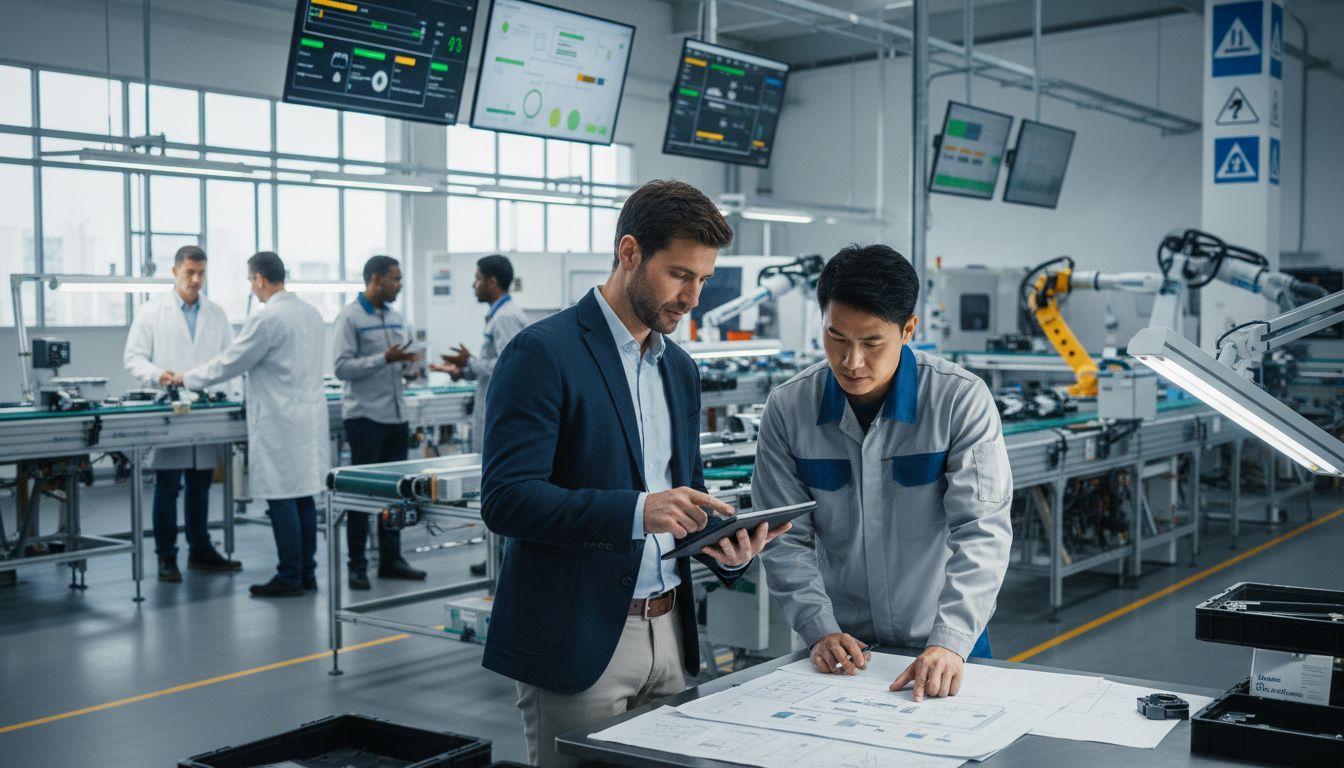
A production manager’s daily responsibilities are complex and multifaceted, requiring strategic oversight and precision across multiple operational domains. Indeed outlines that these professionals are fundamentally responsible for overseeing manufacturing and production processes, creating comprehensive production schedules, procuring and maintaining critical equipment, and monitoring both productivity rates and product standards.
According to ProjectManager, the role demands a comprehensive approach to organizational management. Production managers must simultaneously juggle multiple critical functions, including:
Planning and organizing intricate production schedules
Monitoring budgets and controlling operational costs
Implementing rigorous quality assurance standards
Supervising staff and team performance
Managing potential operational risks
Collaborating with procurement and logistics teams
Ensuring consistent equipment maintenance
Enforcing strict health and safety regulations
Beyond these technical responsibilities, production managers serve as crucial communication bridges between different organizational departments. They translate strategic objectives into actionable plans, ensuring that creative vision, financial constraints, and operational capabilities align seamlessly. This requires exceptional interpersonal skills, analytical thinking, and the ability to make quick, informed decisions under pressure.
Learn more about the intricacies of project management in our guide to understanding project management in film. Production managers are the unsung heroes who transform complex organizational challenges into smooth, efficient operational realities across diverse industries.
Skills, Qualifications, and Career Pathways
Becoming a successful production manager requires a strategic blend of educational background, technical expertise, and professional skills. Supply Chain Guide emphasizes that individuals typically need a bachelor’s degree in business, engineering, manufacturing, or a related field to establish a strong foundation for this dynamic career.
The essential skill set for production managers is comprehensive and multifaceted. Education Directory highlights that professionals must develop a sophisticated combination of technical and interpersonal competencies, including:
Advanced technical equipment proficiency
Deep understanding of industry-specific regulations
Exceptional communication and leadership abilities
Robust problem-solving and analytical thinking skills
Precise time management capabilities
Comprehensive knowledge of industry standards and processes
Strategic planning and organizational skills
Adaptability in complex, fast-changing environments
Career progression for production managers often follows a structured pathway. Professionals typically start in junior roles like production supervisors or operations coordinators, gradually advancing through experience, continuous learning, and demonstrated performance. Strategic career development might involve pursuing specialized certifications, attending professional development workshops, and gaining cross-functional experience across different production environments.
Here’s a summary of essential skills, qualifications, and career pathways for aspiring production managers:
Area | Key Requirements | Common Examples |
Education | Bachelor’s degree | Business Engineering Manufacturing |
Technical Skills | Industry regulations Equipment proficiency Quality control | Lean manufacturing Compliance standards |
Interpersonal Skills | Leadership Communication Team coordination | Staff supervision Interdepartmental liaison |
Career Progression | Entry-level roles Certifications Continuous learning | Production supervisor Workshops Cross-functional roles |
Understanding the nuanced relationships in production management can be complex.
For deeper insights into the professional dynamics, explore our guide to understanding the difference between director and producer, which provides valuable context about professional roles and interactions in creative production environments.
Types of Production Managers in Film and TV
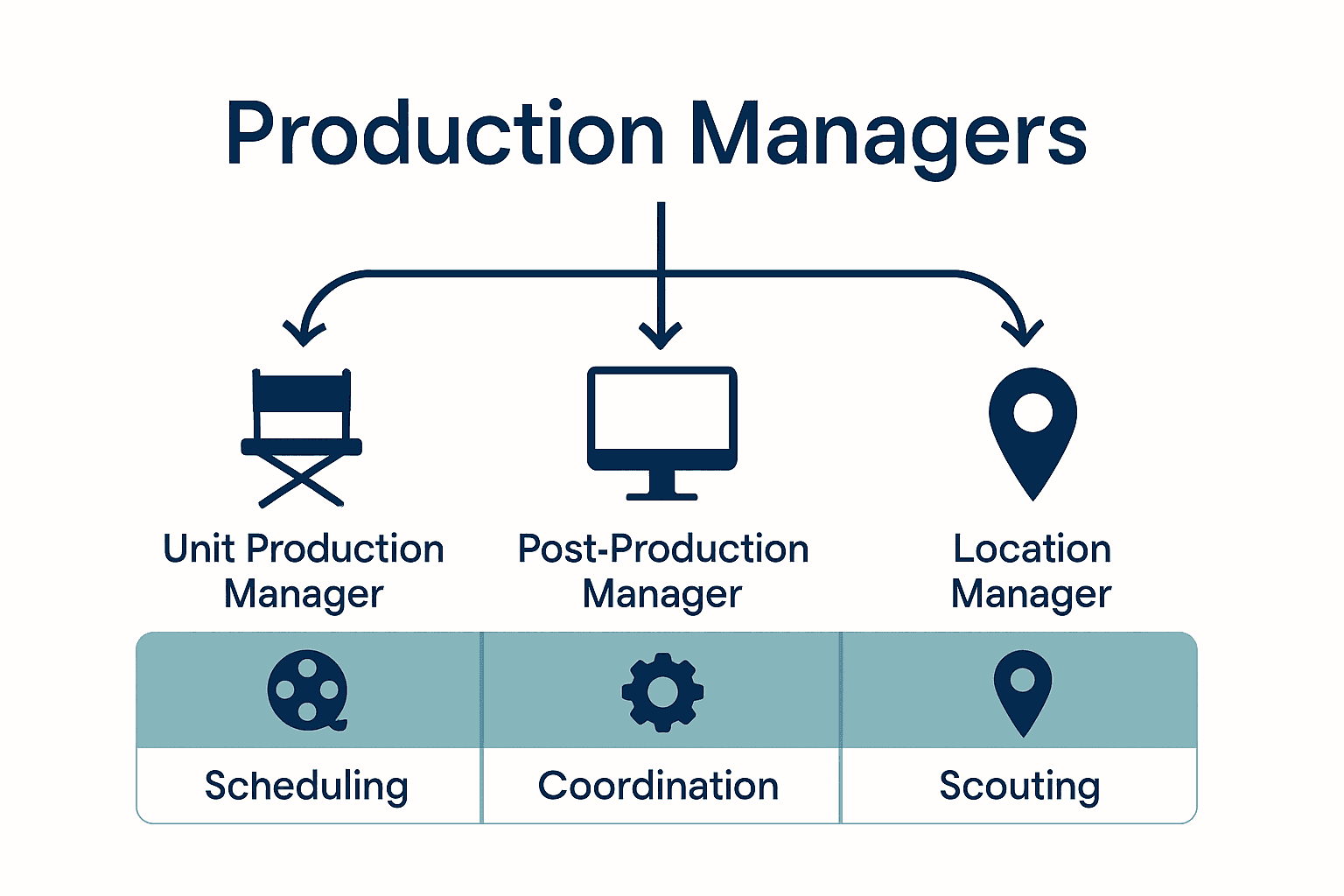
Production management in film and television is a complex landscape with multiple specialized roles, each addressing unique aspects of the creative and operational process. Wikipedia defines the unit production manager (UPM) as a critical administrative role responsible for managing production budgets, coordinating intricate schedules, and ensuring daily operations remain on track and within financial constraints.
The diverse types of production managers include:
Unit Production Manager (UPM): Oversees overall production administration
Line Producer: Manages daily operational budgets and financial logistics
Post-Production Manager: Coordinates editing, visual effects, and final content assembly
Location Production Manager: Handles location scouting, permits, and on-site logistics
Studio Production Manager: Manages internal studio-based production processes
Television Production Manager: Specializes in episodic and series production workflows
In theatrical contexts, Wikipedia) highlights that production managers play a crucial interdisciplinary role. They coordinate complex operations across scenic design, costume development, lighting, and sound departments, translating the creative vision of producers and directors within technical and resource limitations.
Understanding the intricate dynamics of production management requires deep insight into team coordination. For a comprehensive exploration of team management strategies, check out our guide on managing large production teams, which provides valuable perspectives on navigating complex collaborative environments.
Challenges, Risks, and Common Mistakes to Avoid
Production management demands exceptional strategic skills and constant vigilance. Project Manager highlights that professionals face numerous challenges, including delicate balances between cost control and maintaining high-quality standards, resolving intricate production bottlenecks, and adapting swiftly to rapidly changing production demands.
Key risks and potential pitfalls in production management include:
Equipment Failure Risks: Unexpected mechanical breakdowns
Supply Chain Disruptions: Potential interruptions in material delivery
Staff Performance Inconsistencies: Variations in team productivity
Budget Overrun Possibilities: Financial management complexities
Safety Incident Potentials: Workplace health and operational risks
Quality Control Challenges: Maintaining consistent product standards
According to Supply Chain Guide, common mistakes production managers must proactively prevent involve:
Insufficient staff training programs
Lack of comprehensive contingency planning
Failure to consistently monitor critical performance metrics
Neglecting regular equipment maintenance
Poor interdepartmental communication strategies
Navigating these challenges requires continuous learning, strategic foresight, and robust risk management techniques. For professionals seeking additional insights into managing complex operational environments, our guide on business travel safety tips offers valuable strategies for maintaining operational effectiveness under diverse circumstances.
Streamline Your Production Management with Expert Local Support
Managing complex production schedules and coordinating resources can feel overwhelming. Whether you are navigating tight budgets, juggling equipment maintenance, or ensuring smooth communication between diverse teams, the challenges discussed in our article highlight the crucial role of effective production management. Smooth execution, risk mitigation, and reliable logistics are critical to transforming creative vision into a successful shoot.

Take control of your next project with trusted local expertise from Video Production Switzerland. With over 20 years of experience, we specialize in resolving the exact challenges a production manager faces by handling permits, sourcing the best crew and gear, scouting locations, and managing accommodations and transport. Visit our landing page to schedule your free consultation right now and discover how partnering with us guarantees a seamless, stress-free production experience in Switzerland.
For further insights into production coordination and management, explore our guides on film production project management and managing large teams to deepen your understanding and prepare for success.
Frequently Asked Questions
What are the primary responsibilities of a production manager?
Production managers are responsible for planning and organizing production schedules, managing budgets, coordinating teams, and ensuring quality control. They also anticipate production challenges and maintain safety standards.
What qualifications do you need to become a production manager?
Typically, a production manager needs a bachelor’s degree in business, engineering, or manufacturing, along with a combination of technical skills and interpersonal abilities, such as leadership and communication.
What types of production managers exist in the film and TV industry?
In film and TV, types of production managers include Unit Production Managers (UPMs), Line Producers, Post-Production Managers, Location Production Managers, Studio Production Managers, and Television Production Managers, each specializing in various aspects of the production process.
What are common challenges faced by production managers?
Common challenges include balancing cost control with quality, resolving production bottlenecks, managing equipment failures, and maintaining effective communication among departments. Production managers must also be prepared for risks like supply chain disruptions and budget overruns.
Recommended
