
Production Coordinators in Film – Key Role in Seamless Shoots

Updated: Sep 12
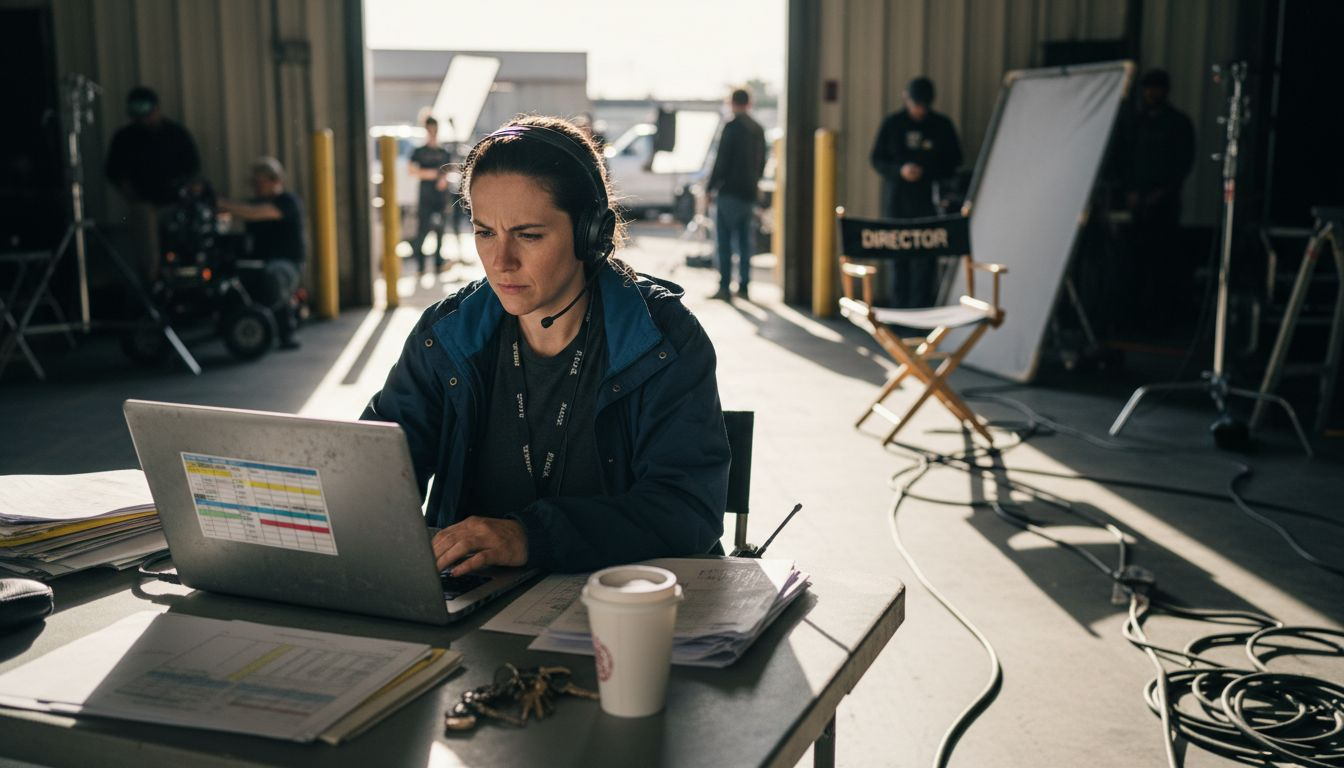
Managing a video shoot in Switzerland involves far more than picturesque locations and creative ambition. For international film producers, understanding the responsibilities of a production coordinator can mean the difference between a seamless shoot and costly delays. These professionals handle every detail from travel logistics to complex scheduling, acting as the organizational backbone that keeps productions running smoothly. Discover how the right expertise in coordination ensures consistency, compliance, and stress-free collaboration for your next Swiss project.
Table of Contents
Key Takeaways
Point | Details |
Role of Production Coordinators | They are vital for managing logistics, schedules, and interdepartmental communication to ensure smooth film production. |
Essential Skills Required | Strong organizational, communication, and problem-solving skills, alongside technical proficiency in production tools, are necessary for success. |
Daily Responsibilities | Coordinators handle tasks like scheduling, resource management, and maintaining documentation to keep the production on track. |
Challenges and Risks | They must navigate unexpected changes and pressures while maintaining production momentum through proactive planning and effective communication. |
Defining the Production Coordinator Role in Film
Production coordinators serve as the critical organizational backbone of film productions, managing complex logistics and communication across multiple departments. These professionals are responsible for ensuring that every aspect of a film shoot runs smoothly, efficiently, and within budget. Film production coordinators are essentially the operational nerve center that keeps productions moving forward.
Their multifaceted responsibilities encompass several key areas of film production management:
Coordinating travel and accommodation logistics for cast and crew
Managing detailed production schedules and timelines
Distributing critical communication between different production departments
Processing and tracking necessary permits and legal documentation
Maintaining comprehensive production office operations
Managing budget allocations and tracking expenses
In the intricate world of film production, production coordinators function as the critical link connecting various teams and ensuring seamless collaboration. Coordination responsibilities begin during pre-production and continue through the final wrap-up, requiring exceptional organizational skills and attention to detail.
Here’s how production coordinators differ from other key crew roles:
Role | Main Focus | Typical Collaboration | Impact on Production |
Production Coordinator | Logistics and scheduling | All departments | Ensures workflow efficiency |
Assistant Director | On-set operations | Directors, crew | Manages shoot execution |
Line Producer | Budget and contracts | Producers, finance | Controls financial risk |
Script Supervisor | Script continuity | Directors, writers | Maintains narrative accuracy |
The role demands exceptional communication abilities, as production coordinators must interface with directors, producers, department heads, and external vendors. They transform complex logistical challenges into smooth, executable plans that keep creative teams focused on producing high-quality cinematic work.
Pro Tip: Aspiring production coordinators should develop strong digital organizational tools and communication skills to manage the complex, fast-moving environment of film production.
This blog article is written by Pieter Nijssen, founder of Video Production Switzerland and an experienced video producer working across Switzerland. He delivers professional corporate and commercial video production for both international and local clients. Pieter is known for a reliable, stress-free production process and high production standards.
Essential Skills and Qualifications Needed
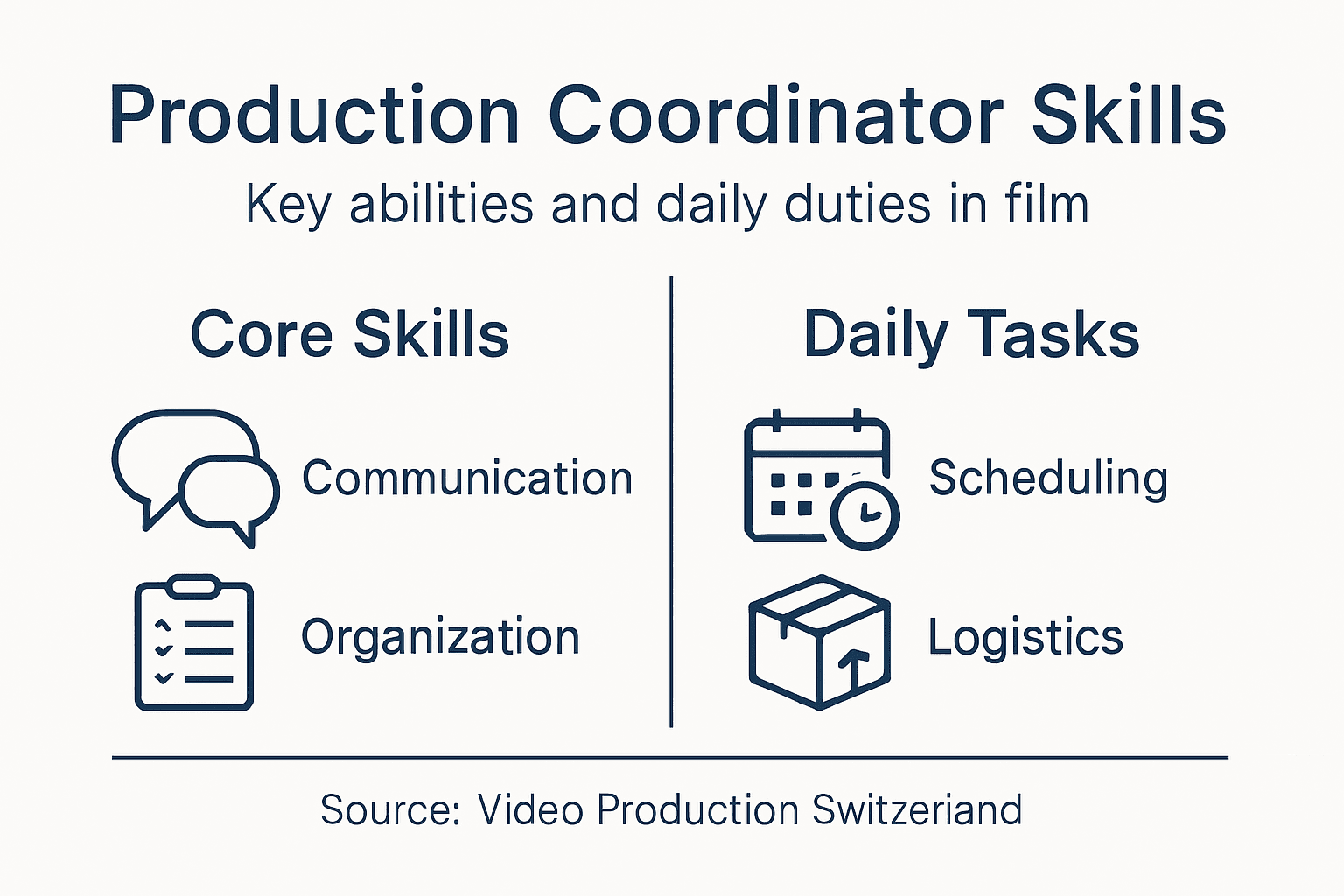
Successful production coordinators possess a unique blend of technical knowledge, creative understanding, and exceptional organizational capabilities. Production coordinator skills represent a critical combination of technical proficiency and interpersonal expertise that enables smooth film production operations.
Key skills and qualifications for production coordinators include:
Advanced organizational and time management abilities
Strong verbal and written communication skills
Proficiency in digital project management tools
Problem-solving and quick decision-making capabilities
Ability to work under high-pressure environments
Detailed understanding of film production workflows
Financial management and budgeting knowledge
The educational background for production coordinators typically combines creative and operational disciplines. Film production management often requires academic credentials in film studies, business administration, or project management. These programs provide foundational knowledge in creative processes and operational strategies essential for navigating complex production environments.

Technical competence is equally important. Production coordinators must master specialized software for scheduling, budgeting, and communication. Proficiency in industry-standard tools like Movie Magic Scheduling, Excel, and comprehensive project management platforms enables efficient coordination across multiple production departments.
Key digital tools that support film production coordinators include:
Tool Name | Primary Use | Benefits to Coordinator |
Movie Magic | Scheduling and budgeting | Streamlines complex planning |
Trello | Task management | Tracks tasks and processes |
Excel | Data tracking | Organizes budgets and lists |
Slack | Team communication | Improves rapid information |
Pro Tip: Invest in continuous learning through online certifications and workshops to stay updated on the latest production management technologies and techniques.
This blog article is written by Pieter Nijssen, founder of Video Production Switzerland and an experienced video producer working across Switzerland. He delivers professional corporate and commercial video production for both international and local clients. Pieter is known for a reliable, stress-free production process and high production standards.
Daily Tasks and Logistical Responsibilities
Production coordinators are the operational heartbeat of film productions, managing an intricate web of daily responsibilities that keep projects running smoothly. Production coordination tasks encompass a complex range of logistical challenges that require precision, adaptability, and strategic thinking.
Typical daily responsibilities include:
Scheduling cast and crew call times
Coordinating equipment and location rentals
Managing travel and accommodation arrangements
Processing contracts and legal permits
Tracking and managing production budgets
Facilitating interdepartmental communications
Resolving unexpected logistical challenges
Maintaining comprehensive production documentation
Interdepartmental communication represents a critical aspect of the production coordinator’s role. Production logistics management requires constant interaction with various departments, ensuring that every team has the information and resources needed to execute their specific responsibilities effectively.
The production coordinator serves as a central communication hub, translating complex logistical requirements into actionable plans. They must anticipate potential challenges, develop contingency strategies, and maintain a proactive approach to problem-solving. This requires not just organizational skills, but also emotional intelligence and the ability to remain calm under pressure.
Successful production coordination is about anticipating needs before they become problems.
Pro Tip: Develop a robust digital filing system and master communication tools to streamline your daily logistical management and reduce potential communication gaps.
This blog article is written by Pieter Nijssen, founder of Video Production Switzerland and an experienced video producer working across Switzerland. He delivers professional corporate and commercial video production for both international and local clients. Pieter is known for a reliable, stress-free production process and high production standards.
Legal Compliance and Safety Management
Legal compliance and safety management represent critical responsibilities for production coordinators, extending far beyond routine administrative tasks. Production legal documentation requires meticulous attention to detail and comprehensive understanding of regulatory requirements.
Key legal and safety management responsibilities include:
Securing necessary filming permits
Processing work visas for international crew members
Verifying comprehensive insurance documentation
Managing location release forms
Conducting risk assessments for shooting environments
Ensuring compliance with local and national regulations
Maintaining comprehensive safety protocols
Tracking and documenting potential liability issues
Production coordinators must develop a proactive approach to risk management. Safety protocol management involves anticipating potential challenges and implementing strategic preventative measures to protect cast, crew, and production assets.
The legal landscape of film production is complex and multifaceted. Coordinators must navigate intricate regulatory environments, which may vary significantly between different locations and jurisdictions. This requires not just technical knowledge, but also the ability to communicate effectively with local authorities, understand nuanced legal requirements, and adapt quickly to changing regulatory landscapes.
Effective legal compliance is about preventing problems before they emerge, not just responding to them after the fact.
Pro Tip: Create a comprehensive digital checklist of legal requirements for each production location to ensure no critical compliance steps are overlooked.
This blog article is written by Pieter Nijssen, founder of Video Production Switzerland and an experienced video producer working across Switzerland. He delivers professional corporate and commercial video production for both international and local clients. Pieter is known for a reliable, stress-free production process and high production standards.
Risks, Challenges, and Common Pitfalls
Production coordinators operate in an environment of constant uncertainty, where high-pressure situations can emerge without warning. The dynamic nature of film production demands exceptional adaptability, strategic thinking, and emotional resilience.
Common challenges production coordinators frequently encounter include:
Last-minute schedule changes
Budget constraint complications
Interdepartmental communication breakdowns
Equipment rental and logistical conflicts
Unexpected travel or permit issues
Crew availability and scheduling conflicts
Technology and technical equipment failures
Unforeseen location access restrictions
The most significant risks involve maintaining production momentum while managing complex, interconnected operational requirements. Effective problem-solving becomes crucial in navigating these potential roadblocks, requiring coordinators to develop robust contingency planning and rapid response strategies.
Successful production coordinators must cultivate a proactive mindset, anticipating potential challenges before they escalate. This involves developing comprehensive communication protocols, maintaining flexible scheduling approaches, and building strong relationships across different production departments to facilitate smooth information exchange and quick resolution of emerging issues.
Adaptability is not just a skill, but a survival strategy in film production coordination.
Pro Tip: Develop a comprehensive digital contingency tracking system that allows real-time documentation and rapid problem resolution during film productions.
This blog article is written by Pieter Nijssen, founder of Video Production Switzerland and an experienced video producer working across Switzerland. He delivers professional corporate and commercial video production for both international and local clients. Pieter is known for a reliable, stress-free production process and high production standards.
Simplify Your Film Production Coordination with Expert Local Support
The article highlights the crucial role of production coordinators who manage complex logistics, ensure legal compliance, handle scheduling, and keep communication flowing among departments for seamless shoots. If you understand how challenging it is to navigate last-minute changes, legal permits, and tight budgets while maintaining smooth collaboration, then you know why reliable local partnership is essential. Production coordination demands precise planning, quick problem-solving, and deep knowledge of local regulations and resources.
Take the stress out of your film production in Switzerland with our trusted team at Video Production Switzerland. We offer over 20 years of experience providing expert logistical management including permit processing, crew sourcing, equipment rental, and location scouting so you can focus on creative success. Learn more about how our expert local crew and gear solutions can be your critical link to efficient workflows. Ready to secure a smooth, on-time shoot? Start with a free consultation today at Video Production Switzerland and experience stress-free film production coordination firsthand.
Frequently Asked Questions
What are the primary responsibilities of a production coordinator in film?
Production coordinators manage logistics such as scheduling, travel arrangements, budget tracking, and communication between different departments to ensure smooth operations throughout the filming process.
How do production coordinators differ from other crew roles in film production?
Production coordinators primarily focus on logistics and organizational tasks, while other roles, such as assistant directors and line producers, concentrate on on-set execution and financial management respectively.
What skills are essential for becoming a successful production coordinator?
Key skills include advanced organizational and time management abilities, strong communication skills, proficiency in project management tools, problem-solving capabilities, and a detailed understanding of film production workflows.
How can a production coordinator ensure legal compliance during filming?
A production coordinator ensures legal compliance by securing necessary permits, verifying insurance documentation, managing location release forms, and conducting risk assessments to adhere to local and national regulations.
Recommended
The Ultimate Guide to Why You Need an On-Site Wedding Coordinator at Your Venue - Adelaide Wedding Venues
