
Simple Production Planning Software: Streamlining Film Logistics


Over 60 percent of international production managers cite coordination as their biggest stressor on set, whether overseeing an American project or a European feature film in Switzerland. Complex crew schedules, equipment management, and location logistics often snowball into chaos without the right tools. This quick guide clarifies how simple production planning software can help filmmakers keep every detail organized, reduce costly errors, and make international shoots in Switzerland more manageable from start to finish.
Table of Contents
Key Takeaways
Point | Details |
Centralized Management | Simple production planning software consolidates scheduling, resource allocation, and workflows into one digital platform for enhanced operational efficiency. |
Types of Software | Filmmaking software varies in type and complexity, from collaborative cloud platforms to standalone applications, catering to different project scales. |
Essential Features | Key functionalities include advanced scheduling, budget tracking, and real-time communication tools, crucial for managing film production complexities. |
Costs and Integrations | Pricing models range widely; teams should evaluate their needs and focus on integration capabilities for a unified workflow ecosystem. |
Defining Simple Production Planning Software
Simple production planning software represents a critical technological solution for filmmakers seeking to streamline complex logistics and coordinate intricate project details. At its core, the software provides a centralized digital platform that enables comprehensive production management by integrating scheduling, resource allocation, and workflow tracking into one accessible system.
These digital tools are designed to address the multifaceted challenges inherent in film production environments. Key functionalities typically include comprehensive crew scheduling, equipment tracking, location management, budget monitoring, and real-time communication channels. By consolidating previously fragmented processes, production planning software transforms chaotic film logistics into a structured, predictable workflow that minimizes potential disruptions and maximizes operational efficiency.
For international filmmakers working across diverse geographical landscapes, simple production planning software becomes an indispensable strategic asset. The software allows teams to synchronize complex schedules, manage cross-border resource requirements, and maintain precise documentation throughout the production lifecycle. Modern solutions often feature cloud-based platforms that enable seamless collaboration between distributed team members, ensuring everyone from producers to local crew can access critical project information instantaneously.
Pro tip: Select production planning software that offers robust mobile compatibility, allowing real-time updates and access directly from film sets, which can dramatically reduce communication delays and potential logistical errors.
Key Types and Core Functionality Explained
Production planning software for filmmaking encompasses several distinct types designed to address unique project requirements. Production management systems range from basic scheduling tools to comprehensive enterprise-level platforms that integrate multiple complex workflows. These solutions are typically categorized into three primary types: collaborative cloud platforms, standalone desktop applications, and hybrid systems that combine on-premise and remote capabilities.
The core functionality of these software solutions revolves around critical management capabilities. Typical features include advanced crew scheduling, equipment tracking, budget management, location logistics, and real-time communication channels. Film production teams can leverage these tools to create detailed shooting schedules, allocate resources efficiently, track expenses, manage talent contracts, and ensure seamless communication across distributed teams. Some advanced platforms even incorporate artificial intelligence algorithms to predict potential scheduling conflicts and optimize production timelines.
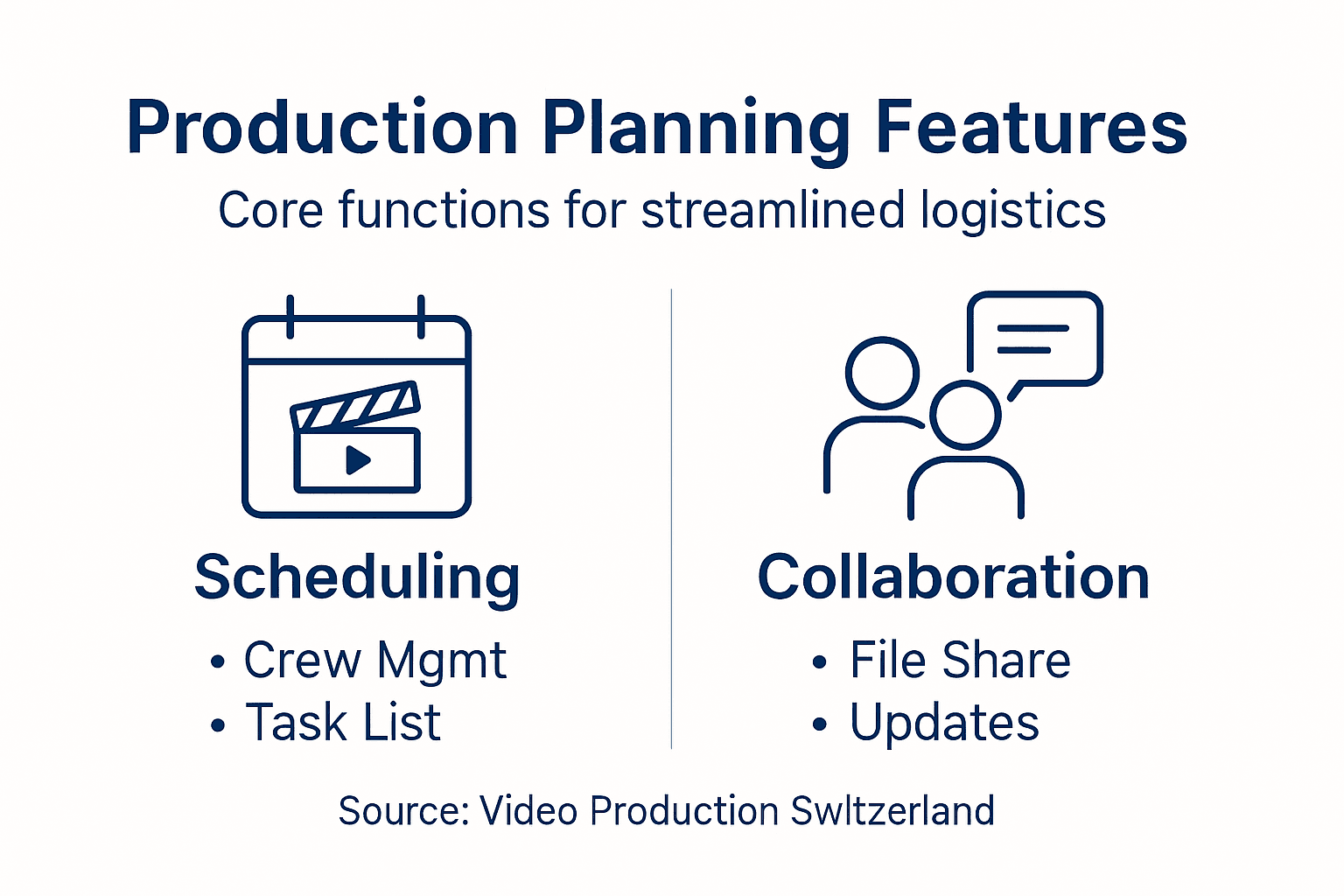
Different production planning software solutions cater to specific filmmaking scales and project complexities. Small independent productions might utilize lightweight mobile applications with basic scheduling features, while large-scale international film projects require robust enterprise solutions with comprehensive integration capabilities. Key differentiating factors include user interface complexity, integration potential with existing production management tools, scalability, reporting capabilities, and the depth of resource management features.
Here’s how the main types of production planning software compare for filmmakers:
Type of Software | Typical Benefits | Project Scale | Collaboration Approach |
Collaborative Cloud | Real-time team updates | Large, distributed teams | Remote access |
Standalone Desktop | Stable offline performance | Small local productions | On-site only |
Hybrid Systems | Flexible, combines both models | Medium to large projects | Mixed mode |
Pro tip: When evaluating production planning software, prioritize solutions offering flexible customization options and robust mobile accessibility to ensure smooth on-set management and real-time collaboration.
Essential Features for Film Production Teams
Film production teams require comprehensive software solutions that address the intricate complexities of multi-stage filmmaking processes. The most effective production planning tools integrate critical features that support seamless workflow management across development, pre-production, production, and post-production stages. These solutions must provide robust capabilities for scheduling, resource allocation, communication, and collaborative project tracking.
Key essential features for film production teams typically include advanced scheduling modules, real-time crew management tools, budget tracking systems, and integrated communication platforms. Production managers need software that enables precise location logistics, talent coordination, equipment tracking, and comprehensive script breakdown capabilities. Advanced platforms now incorporate artificial intelligence algorithms to predict potential scheduling conflicts, optimize resource allocation, and provide predictive analytics that help teams make informed decisions throughout the production lifecycle.

The technological landscape of production planning software continues to evolve, with cloud-based solutions offering unprecedented flexibility for distributed film teams. Modern software platforms support cross-platform collaboration, multiple media format integrations, and sophisticated project management tools that connect different departments seamlessly. From independent documentaries to large-scale international film productions, these software solutions must offer scalable features that can adapt to varying project complexities and team sizes.
Key advanced features and their business impact for film production teams:
Feature | Business Impact | When Most Valuable |
AI-powered Scheduling | Reduces delays, avoids conflicts | Complex shooting schedules |
Integrated Budget Tools | Prevents overspending, improves control | Large productions |
Mobile Crew Management | Enhances on-set decision-making | Fast-paced environments |
Script Breakdown Modules | Streamlines pre-production organization | Script-heavy projects |
Pro tip: Prioritize production planning software with robust mobile compatibility and cloud synchronization to ensure your entire team can access critical project information in real-time, regardless of their physical location.
Comparing Costs, Subscriptions, and Integrations
Production planning software pricing models vary significantly, reflecting the diverse needs of film production teams. Online project planning tools offer subscription-based access with pricing structures that range from basic monthly plans to comprehensive enterprise-level packages. Smaller independent productions might find affordable solutions starting at $50-$200 per month, while large-scale film projects could invest $500-$2,000 monthly for advanced enterprise-level platforms with extensive customization and integration capabilities.
Subscription tiers typically differentiate based on several critical factors: number of users, storage capacity, advanced features, and integration potential. Basic plans often support 3-5 users with limited storage and essential scheduling tools, while premium packages provide unlimited users, cloud storage, advanced AI-powered scheduling algorithms, real-time collaboration features, and comprehensive reporting capabilities. Film production teams should carefully evaluate their specific project requirements, considering factors like team size, project complexity, and budget constraints when selecting an appropriate subscription level.
Integration capabilities represent a crucial consideration when comparing production planning software solutions. The most valuable platforms offer seamless connections with existing tools such as accounting software, payroll systems, location scouting databases, and communication platforms. Modern production planning software increasingly supports API integrations that allow custom connections with specialized film industry tools, enabling production managers to create a unified workflow ecosystem that reduces manual data entry and minimizes potential communication gaps across different departments.
Pro tip: Request detailed demos and free trial periods from multiple production planning software providers to thoroughly assess their integration capabilities and user experience before committing to a long-term subscription.
Common Challenges and Mistakes to Avoid
Film production teams frequently encounter significant challenges when implementing production planning software, with project management obstacles representing critical potential pitfalls. Common mistakes include inadequate software training, poor data migration strategies, insufficient customization, and overlooking critical integration requirements. These errors can lead to workflow disruptions, communication breakdowns, and ultimately compromise the entire production’s efficiency and budget management.
Scheduling represents another complex area where production teams frequently make critical mistakes. Improper task sequencing, unrealistic time estimations, and failure to account for potential contingencies can derail even well-planned film productions. Production managers must develop robust scheduling strategies that include buffer times, account for potential equipment failures, talent availability constraints, and unexpected location challenges. Advanced software solutions now offer predictive analytics and AI-powered scheduling tools that can help mitigate these risks by providing more accurate timeline projections and resource allocation recommendations.
Technological adaptation challenges also emerge as significant obstacles for film production teams transitioning to new planning software. Many teams struggle with resistance to change, insufficient digital literacy, and complex user interfaces that create barriers to effective implementation. Successful software adoption requires comprehensive team training, phased implementation strategies, and selecting platforms with intuitive design and strong user support. Production managers should prioritize solutions that offer robust onboarding resources, responsive customer support, and flexible configuration options that can adapt to unique production workflow requirements.
Pro tip: Conduct comprehensive team workshops and provide multiple training sessions when introducing new production planning software to ensure smooth technological transition and maximum user adoption.
Simplify Your Film Production Planning with Expert Local Support
Managing complex film schedules, coordinating crew and equipment, and navigating unpredictable logistics are challenges that can quickly overwhelm even the most experienced production teams. This article highlights how simple production planning software tackles critical pain points like scheduling conflicts, resource allocation, and real-time communication. However, cutting-edge software alone cannot fully replace the value of trusted on-the-ground expertise and seamless logistical management.
At Video Production Switzerland, we combine 20 years of local market knowledge with comprehensive production services that address exactly these challenges. From securing permits and sourcing reliable local crew to coordinating transportation and scouting locations, our professional team ensures your international film project runs smoothly and on schedule. When technology meets expert local support, you get predictable workflows, risk reduction, and peace of mind.
Take control of your film logistics today by partnering with a trusted production ally. Visit our Video Production Switzerland landing page to discover how we can complement your production planning software with real-world solutions designed for Swiss environments. Get started with a free consultation and see how expert local coordination makes all the difference in streamlining your film shoot.
Frequently Asked Questions
What is simple production planning software?
Simple production planning software is a digital tool designed to streamline film logistics by integrating scheduling, resource allocation, and workflow tracking into a centralized platform for filmmakers.
What are the key features of production planning software for filmmakers?
Key features typically include advanced scheduling modules, real-time crew management, budget tracking systems, integrated communication platforms, and tools for location logistics and equipment tracking.
How does production planning software improve film production efficiency?
Production planning software enhances efficiency by consolidating fragmented processes, allowing for better team communication, precise resource management, and the ability to predict and resolve scheduling conflicts.
What factors should I consider when choosing production planning software?
When selecting production planning software, consider user interface complexity, integration capabilities with existing tools, scalability, customization options, and the specific features that align with your production’s size and complexity.
Recommended
