
6 Key Switzerland Corporate Video Trends for 2026

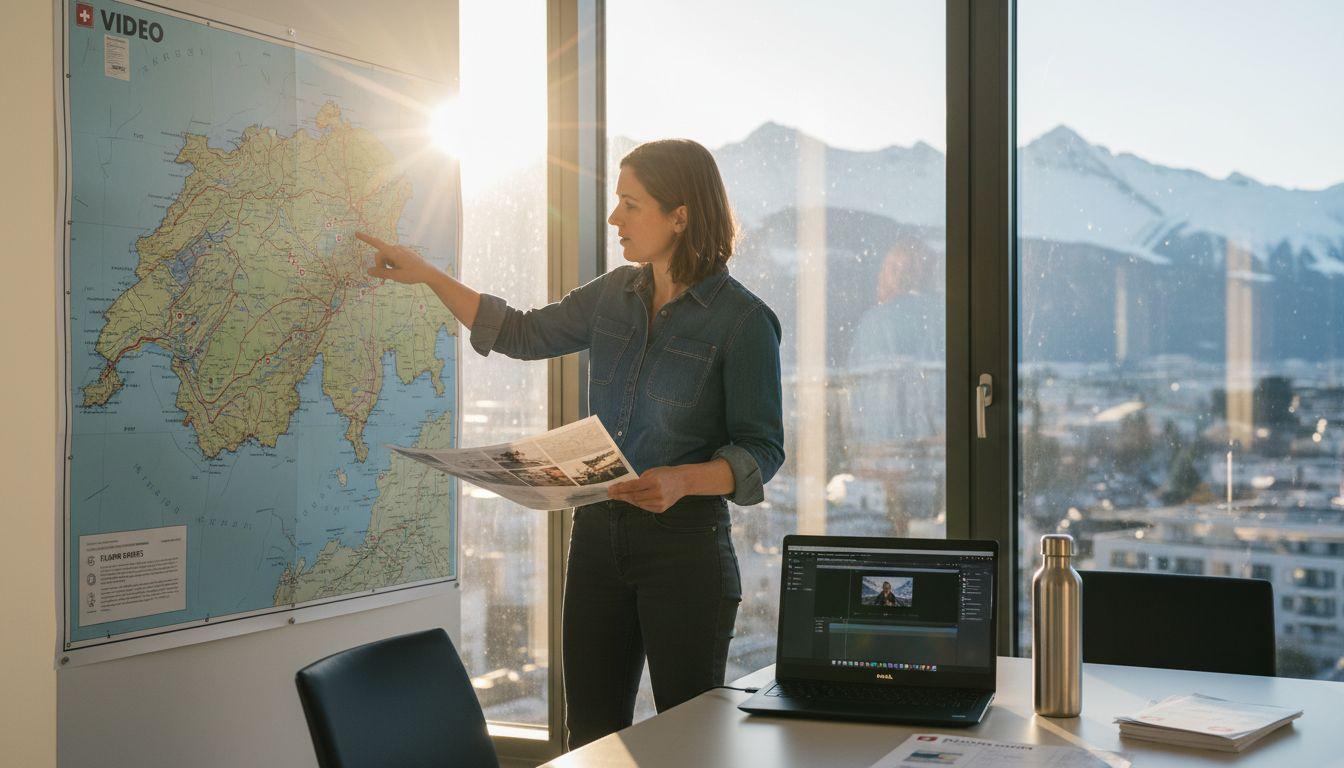
Creating a corporate video that truly connects with your audience in Switzerland can seem overwhelming. Cookie-cutter visuals and generic messages just do not inspire trust or set your company apart in a crowded market. What you need are strategies that reflect genuine values, real locations, and the shifts re-shaping video production in 2026.
This list breaks down actionable ideas that make your videos more memorable and effective. You will discover how authentic Swiss landscapes, smart production methods, and meaningful sustainability stories turn standard company footage into something audiences trust. Get ready to unlock practical insights that can transform every stage of your corporate video—no matter your experience level.
Table of Contents
Quick Summary
Takeaway | Explanation |
1. Invest in Authentic Locations | Using real Swiss landscapes enhances brand trust and storytelling by connecting with audiences on an emotional level. |
2. Embrace Hybrid Production Models | Combining on-site teams with remote direction improves efficiency and reduces costs while maintaining high-quality outputs. |
3. Integrate Sustainability in Your Narrative | Authentic sustainability claims build credibility and resonate with eco-conscious consumers expecting measurable outcomes and transparency. |
4. Utilize Local Crews for Logistics | Local production teams navigate Swiss regulations and logistics, ensuring smoother operations and cost savings during shoots. |
5. Personalize Content for Global Audiences | Multilingual video versions tailored to cultural contexts significantly boost engagement and conversion rates, fostering deeper connections. |
1. Embracing Authentic Swiss Landscapes for Visual Impact
Authentic Swiss landscapes have become the foundation of compelling corporate video strategies in 2026. Rather than relying on generic studio backdrops, brands are leveraging real Swiss environments to tell genuine stories that resonate with audiences seeking sincerity.
Audiences today are tired of overly polished, manufactured content. They want to see real places, real people, and genuine moments that reflect a brand’s true values. Authentic corporate video strategies emphasize this shift, moving away from sterile corporate aesthetics toward storytelling rooted in locality and truth.
Why does this matter for your brand? Authentic landscapes create immediate trust. When viewers see a genuine Swiss mountain valley, lakeside town, or forest setting, they recognize the honesty in your message. This emotional connection transforms a corporate message into a memorable brand experience.
Consider the practical benefits of location-based filming:
Real Swiss environments eliminate the need for expensive set construction and design
Natural lighting in Alpine regions reduces production complexity and costs
Scenic backdrops add production value without requiring special effects or post-production enhancement
Authentic locations strengthen your brand’s connection to Switzerland’s reputation for quality and reliability
For international brand managers, this trend means one thing: invest in genuine location scouting. The Swiss landscapes work hardest when they’re integral to your narrative, not just window dressing. Your film shoots benefit from stunning photo locations that tell your story authentically.
Implementing this approach requires understanding how to match your brand narrative with the right locations. Alpine peaks convey strength and stability. Lakeside settings suggest clarity and peace. Village streets communicate community and heritage. The landscape becomes your visual vocabulary.
The practical execution is straightforward:
Define your brand story and emotional tone first
Identify Swiss landscapes that naturally embody those qualities
Coordinate with local production teams familiar with location logistics
Plan shoots during seasons that showcase the environment authentically
Build filming schedules around natural lighting and weather patterns
Authentic landscapes don’t just look better on camera—they tell your brand’s truth and build genuine audience trust.
Production timelines deserve attention here. Real locations require permits, weather consideration, and logistical coordination. Planning ahead ensures your shoot captures the landscape’s best qualities while respecting local regulations and environmental factors.
Pro tip: Scout locations during the same season you plan to film, as Swiss landscapes transform dramatically between seasons—autumn’s golden light differs entirely from winter’s crisp clarity, and each conveys different brand messages.
2. Optimizing Remote Production and Hybrid Shoots
Hybrid and remote production models are reshaping how corporate videos get made in 2026. Teams can now split between on-site filming crews and remote directors, combining the best of both worlds to create seamless, efficient workflows that reduce costs and expand creative possibilities.
The shift reflects post-pandemic workplace evolution. Companies discovered that distributed teams don’t slow down production—they accelerate it. Remote collaboration powered by cloud-based tools enables creative direction, asset sharing, and live monitoring without everyone needing to be physically present on set.
Why does this matter? Remote-hybrid models eliminate geographical constraints. Your Swiss filming crew can work while your creative director collaborates from another continent in real-time. This approach maintains quality while reducing logistical overhead and accommodation costs.
The mechanics are straightforward. Live feeds from set connect to remote directors through secure cloud platforms. Teams share assets instantly, allowing for rapid feedback and adjustments. This setup works particularly well when managing remote teams for seamless video production across multiple time zones and locations.
Practical benefits include:
Real-time creative direction without expensive travel or on-set delays
Instant asset sharing enabling faster decision-making and approvals
Reduced crew requirements on location, lowering production budgets
Flexibility to scale teams up or down based on project needs
Better work-life balance for international teams spanning multiple regions
2026 production strategies also prioritize a two-speed approach. Fast-turnaround vertical content gets produced alongside longer anchor videos through modular shoots. A single recording session generates multiple formats optimized for different platforms—social media clips, full-length stories, and behind-the-scenes content all from one shoot.
This multiplier effect maximizes your production value. Instead of filming separately for TikTok, LinkedIn, and YouTube, you capture flexible footage that works across all channels. AI-driven editing increasingly handles formatting and repurposing, letting human creatives focus on storytelling.
Implementation requires three key elements:
Invest in reliable cloud infrastructure for file sharing and communication
Establish clear protocols for remote direction and decision-making
Schedule shoots to accommodate multiple time zones and review cycles
Hybrid production isn’t about choosing between remote and in-person—it’s about combining them strategically to accelerate creativity and reduce friction.
Technology handles the heavy lifting. Modular shoot planning means you capture versatile footage once, then adapt it for any format. This reduces reshoots and revision cycles, saving time and money throughout post-production.
Pro tip: Structure your shoots around 30-minute modular segments, with each segment designed to work as standalone content or within larger narratives—this flexibility lets remote teams repurpose material instantly while keeping directors engaged across time zones.
3. Incorporating Sustainability in Video Storytelling
Sustainability is no longer a marketing afterthought—it’s becoming central to how brands tell their stories through corporate video in 2026. Companies that authentically integrate sustainability into their narratives build credibility with eco-conscious audiences who demand real impact, not greenwashing.
The shift represents a fundamental change in what audiences expect. Generic sustainability claims no longer resonate. Consumers want measurable outcomes, transparent processes, and evidence-based storytelling that demonstrates actual environmental and social progress, not just feel-good messaging.
Authentic sustainability narratives go beyond surface-level green claims. Your videos should feature real interviews, measurable results, and third-party verification. This approach builds trust because it reflects genuine commitment rather than corporate theater.
Why does this matter for your brand? Eco-conscious consumers actively choose brands aligned with their values. Video content that transparently showcases sustainability initiatives positions your company as responsible and accountable. This resonates far deeper than traditional advertising ever could.
Practical sustainability integration includes:
Featuring verified environmental outcomes with specific metrics and timelines
Interviewing employees, partners, and third-party verifiers who validate claims
Documenting long-term progress rather than one-time initiatives
Showing production practices that reflect your sustainability values
Highlighting community impact alongside environmental goals
Sustainable video production best practices extend beyond storytelling content. Your filming process itself should reflect these values through reduced travel, energy-efficient equipment, and minimal waste practices.
This dual approach—sustainable storytelling plus sustainable production—sends a coherent message. You’re not just talking about responsibility; you’re living it. This alignment between message and method creates powerful brand differentiation.
Production planning now considers sustainability from day one:
Assess environmental impact of location choices and crew travel
Select energy-efficient filming equipment and technologies
Plan shoots to minimize logistical complexity and redundancy
Document production sustainability practices for potential inclusion
Partner with suppliers sharing your environmental values
Authentic sustainability narratives don’t just feel good—they build lasting audience trust by proving your commitment through transparent, measurable action.
The timeline matters too. Sustainable storytelling emphasizes long-term progress, not quick fixes. Your video content should reflect how your company evolves year after year, showing incremental improvements and honest acknowledgment of challenges.
This honesty resonates with audiences tired of corporate perfection. Real stories about environmental progress—complete with obstacles overcome—feel infinitely more credible than polished narratives about problem-solved.
Pro tip: Include third-party verification visuals or statements directly in your video to instantly establish credibility, then layer in employee testimonials explaining how sustainability initiatives affect their daily work and company culture.
4. Leveraging Drone Footage for Striking Aerial Views
Drone footage has become essential in corporate video production, transforming how brands showcase their scope and authority. Aerial perspectives create dramatic visual impact that ground-level shots simply cannot match, instantly elevating your corporate storytelling in 2026.
Aerial views establish context instantly. When viewers see your facility, project, or landscape from above, they grasp scale and scope immediately. This bird’s-eye perspective conveys confidence and innovation—qualities that resonate with business audiences evaluating partnership opportunities.
Dynamic aerial perspectives do more than look impressive. They communicate size, sophistication, and forward-thinking vision. A manufacturing facility filmed from above reveals operational complexity. A campus shot from above showcases growth and ambition. These visuals create a prestigious brand language without saying a word.
Why does this matter? Competitive advantage in corporate communications increasingly depends on visual differentiation. Drone content elevates your brand perception by demonstrating investment in quality production and willingness to showcase operations transparently. Leading brands understand that aerial storytelling builds credibility.
Effective drone integration requires purposeful planning:
Storyboard aerial transitions before filming to ensure narrative flow
Align drone shots with specific storytelling goals, not just visual flair
Use high-resolution footage that conveys premium quality and attention to detail
Capture establishing shots that ground viewers in location and scale
Plan dynamic movements that reveal your story rather than distract from it
Understanding drone laws in Switzerland is critical before planning aerial shoots. Regulations affect where, when, and how you can operate equipment, making compliance essential for seamless production.
Drone content works best when integrated strategically throughout your narrative rather than as standalone spectacle. Use aerials to open scenes, transition between locations, or reveal the full scope of your operations. This purposeful approach strengthens your visual storytelling.
Practical implementation steps:
Identify key locations where aerial perspective adds narrative value
Plan drone shots that reveal something meaningful about your brand
Coordinate with local production partners familiar with regulations
Schedule shoots during optimal lighting conditions for maximum visual impact
Incorporate aerial transitions that maintain storytelling momentum
Drone footage isn’t about spectacular visuals—it’s about revealing your company’s scale, innovation, and confidence through a perspective audiences rarely experience.
High-resolution aerial shots create visual prestige that enhances brand perception. Modern drones capture 4K footage with remarkable clarity, ensuring your aerial perspectives look professional and premium. This technical quality matters when audiences evaluate your company’s sophistication.
Pro tip: Plan drone shots to reveal something about your operations or values rather than filming for spectacle—a sweeping aerial of sustainable practices or innovative facilities tells your brand story far more effectively than generic landscape coverage.
5. Utilizing Local Crews for Seamless Logistics
Local Swiss crews are your secret weapon for stress-free international video production. When you partner with teams that know the terrain, understand permits, and have established vendor relationships, your shoot runs on time and on budget.
International filmmakers often underestimate the logistical complexity of Swiss shoots. Permits require specific applications. Equipment rental vendors need advance coordination. Transportation networks differ from home markets. Local crews navigate these challenges effortlessly because they live them daily.
Local expertise eliminates the guesswork from production planning. Your Swiss crew already knows which locations require permits, which vendors are reliable, and what transportation makes sense for mountain shoots. They’ve solved these problems repeatedly.
Why does this matter for your brand? Logistics problems become creative disasters fast. A delayed equipment delivery kills your shooting schedule. Permit issues force location changes mid-production. Transportation breakdowns strand your team. Local crews prevent these nightmares through deep market knowledge and established relationships.
Practical benefits of local partnerships include:
Instant access to trusted equipment vendors and reliable suppliers
Navigating permits and regulations without costly mistakes or delays
Understanding location logistics specific to Alpine filming environments
Real-time problem solving when unexpected challenges emerge
Established relationships that accelerate vendor negotiations and delivery
Local crews understand Swiss culture and working practices in ways international teams cannot replicate quickly. They communicate effectively with local authorities, vendors, and property owners. This cultural fluency transforms potential friction points into smooth transactions.
Seamless video shoot management requires coordination across dozens of moving parts simultaneously. Local teams excel at this orchestration because they’ve built relationships and systems specifically designed for Swiss production challenges.
The economics work in your favor too. Local crews cost less than flying international specialists while delivering superior results through local knowledge. You get better outcomes at lower cost, freeing budget for other production elements.
Implementing local crew partnerships effectively:
Identify experienced local production teams with established vendor networks
Discuss your creative vision and logistical constraints upfront
Leverage their recommendations on locations, timing, and budget allocation
Trust their expertise on regulatory and technical requirements
Build relationships for future projects and consistent quality
Local crews don’t just handle logistics—they solve problems before they become crises, turning potential disasters into seamless production days.
Communication becomes effortless when crews share language, culture, and market understanding. Your creative direction translates accurately. Local vendors respond quickly. Unexpected challenges get resolved collaboratively rather than through frustrating back-and-forth communication across time zones.
Pro tip: Establish relationships with Swiss crews early and involve them in pre-production planning discussions—their input on location scouting, timing, and logistics often reveals cost savings and efficiency improvements you wouldn’t discover alone.
6. Personalizing Videos with Multilingual Content
Multilingual video content is no longer optional—it’s the standard for reaching global audiences in 2026. Companies that personalize videos across languages, regions, and cultural preferences dramatically increase engagement and conversion rates compared to one-size-fits-all approaches.
Your Swiss production reaches audiences worldwide, but only if they understand your message in their native language. A corporate video dubbed into German resonates differently than the English original. Subtitles enable accessibility. Localized versions respect cultural nuances. Each format increases your message’s impact exponentially.
Hyper-personalization through multilingual content means producing thousands of customized video versions tailored to specific audiences. AI and video automation platforms now make this scalable and affordable. Your single shoot generates content optimized for German-speaking markets, French regions, Italian audiences, and English-speaking stakeholders simultaneously.
Why does this matter? Global brands lose audience engagement when forcing viewers to watch content in unfamiliar languages. Multilingual delivery removes friction. Viewers stay engaged longer. Conversion rates improve. International teams feel valued when hearing messaging in their native language.
Practical benefits of multilingual strategy include:
Increased engagement from audiences viewing content in preferred languages
Higher conversion rates when messaging feels culturally relevant
Expanded reach across German, French, Italian, and English markets
Consistent brand messaging adapted for regional context and preferences
Accessibility compliance through captions and dubbing options
AI technologies streamline localization dramatically. Advanced translation tools maintain message consistency while adapting for cultural resonance. Creating effective localized video content requires planning that balances authenticity with accessibility across multiple languages simultaneously.
Implementation now happens at scale without proportional cost increases. Your production captures universal footage, then generates region-specific versions through AI-assisted dubbing, subtitling, and cultural adaptation. This multiplier effect maximizes ROI on every production dollar invested.
Building multilingual strategy:
Identify target markets and priority languages for your content
Plan shoots capturing flexible footage that works across cultural contexts
Invest in professional translation and localization, not just automated tools
Coordinate voice talent or dubbing that matches brand tone and personality
Test culturally adapted versions with native audiences before final distribution
Multilingual content isn’t about translating words—it’s about ensuring your brand message resonates authentically in every audience’s language and cultural context.
Authenticity matters more than perfect literal translation. A German-speaking audience detects inauthentic dubbing immediately. Professional localization respects cultural differences while preserving your brand voice. This attention to detail signals respect for diverse markets and builds lasting audience trust.
Pro tip: Plan your original shoot with localization in mind by using clear visuals, minimal on-screen text, and deliberate pacing that accommodates different language rhythms—this flexibility reduces localization costs while improving quality across all language versions.
Below is a comprehensive table summarizing the strategies, implementations, and benefits discussed throughout the article on modern corporate video production practices in 2026.
Strategy/Concept | Implementation Process | Benefits/Outcomes |
Embracing Authentic Landscapes | Leverage natural Swiss environments for storytelling aligned with brand authenticity. Ensure scout locations match narrative tone. | Creates audience trust, reduces set building costs, and enhances emotional connection to the message. |
Hybrid & Remote Production | Use cloud-based tools for live remote management combined with on-site filming crews. Implement workflows for modular content recording. | Reduces logistical expenses, accelerates creative collaborations, and enables flexibility in production scales. |
Sustainable Video Storytelling | Integrate verified environmental outcomes and use sustainability-focused production practices. Showcase initiatives transparently through focused messaging. | Builds credibility among eco-conscious audiences while aligning production methods with sustainability values. |
Drone Photography for Aerial Views | Plan purpose-driven aerial transitions and incorporating dynamic drone shots into the visual narrative. Adhere to local aviation regulations. | Enhances storytelling impact, conveys scale and innovation, and improves visual differentiation. |
Utilizing Local Expertise | Partner with Swiss production teams possessing location knowledge and established vendor networks. Plan pre-production involving local crew input. | Streamlines logistics, reduces production delays, and ensures culturally fluent communication. |
Multilingual Content Creation | Create culturally adapted video versions using AI-assisted localization tools. Tailor content for German, French, Italian, and English audiences. | Expands reach, boosts engagement by respecting cultural preferences, and increases global market impact. |
Streamline Your Swiss Corporate Video Production with Expert Local Support
Navigating challenges like authentic Swiss landscapes, complex permits, and hybrid production models can stall even the most ambitious corporate video projects. With over 20 years of experience, we specialize in turning these obstacles into seamless opportunities by providing trusted local crews, expert logistical management, and comprehensive production support. Whether you’re aiming to incorporate stunning aerial drone footage or create multilingual personalized content, our deep market knowledge ensures your shoot stays on schedule and on budget without compromising quality.
Partner with a team that understands Swiss regulations, secures top-notch equipment, and handles location scouting to enhance your storytelling. Discover how working with local professionals can eliminate stress and elevate your corporate videos authentically.
[
Ready to transform your 2026 corporate video strategy into a smooth, high-impact production? Visit videoproductionswitzerland.com now for a free initial consultation. Learn more about how we manage seamless video shoot logistics and collaborate effectively with remote and local teams to bring your vision to life without compromise.
Frequently Asked Questions
How can I integrate authentic Swiss landscapes into my corporate video strategy for 2026?
To incorporate authentic Swiss landscapes, first define your brand story and emotional tone. Then identify locations that naturally embody those qualities and plan shoots that align with real Swiss environments.
What are the benefits of hybrid and remote production for corporate videos?
Hybrid and remote production models allow teams to collaborate in real-time across different locations, reducing costs and streamlining workflow. Implement this strategy by investing in reliable cloud infrastructure and clear communication protocols to enhance creativity and efficiency.
How can my brand effectively showcase sustainability in video storytelling?
To showcase sustainability, feature verified environmental outcomes and real interviews in your videos. Focus on documenting long-term progress and community impact to build credibility and trust with eco-conscious audiences.
What role does drone footage play in corporate video production for 2026?
Drone footage provides dramatic aerial views that enhance visual storytelling and convey scale and sophistication. Plan aerial shots strategically, ensuring they align with your narrative and reinforce your brand’s message.
Why should I use local Swiss crews for video production?
Utilizing local Swiss crews simplifies logistical challenges such as permits and equipment rentals, ensuring your shoot stays on schedule. Build partnerships with experienced local teams to leverage their expertise for a smoother production process.
How do I create multilingual content for my corporate videos?
To create multilingual content, plan shoots that capture flexible footage suitable for different languages and cultures. Invest in professional localization services to adapt your messages effectively, ensuring clarity and engagement in every target market.
Recommended
