
How to Manage Remote Teams for Seamless Video Production


Remote video production projects face unique obstacles, with nearly 85 percent of remote teams reporting communication breakdowns as a leading cause of delays. Staying connected and organized can quickly become a challenge when everyone works from separate locations. This guide offers practical strategies that help remote video production teams streamline collaboration, set clear roles, and maintain momentum from pre-production to final edits.
Table of Contents
Quick Summary
Key Point | Explanation |
1. Establish effective communication channels | Use varied platforms like messaging and video calls to enhance clarity and prevent misunderstandings. |
2. Define roles and expectations clearly | Create a role matrix detailing responsibilities and communication protocols to align team efforts. |
3. Utilize collaborative project management tools | Select tools that enhance task tracking, file sharing, and real-time collaboration to improve workflow. |
4. Implement structured feedback processes | Regular feedback sessions should be constructive and focused on growth to maintain morale and quality. |
5. Monitor progress and tackle challenges timely | Regularly check project progress to identify and address potential issues collaboratively before they escalate. |
Step 1: Establish Clear Communication Channels
Successful remote video production hinges on establishing robust communication pathways that transcend physical distance. According to arxiv, systematic mapping of information flows is critical to preventing misunderstandings and project delays.
Start by selecting multiple communication platforms tailored to different communication needs. Media Richness Theory suggests utilizing varied channels to accommodate different information complexity levels. For remote video production teams, this might mean:
Instant messaging for quick queries and real time updates
Video conferencing for detailed creative discussions
Project management software for tracking tasks and timelines
Cloud document sharing for collaborative script and storyboard editing
The key is matching communication medium to message complexity. Complex creative discussions require rich media like video calls, while simple task updates can happen through text channels. Understanding Team Communication Best Practices for Filmmakers offers deeper insights into creating seamless team interactions.
Establish clear protocols around response times and preferred communication methods. Set expectations early about how quickly team members should acknowledge messages and which platforms are most appropriate for different types of communication. This prevents communication bottlenecks and ensures everyone stays aligned on project goals.
In the next step, we will explore how to create structured communication rhythms that keep your remote video production team synchronized and productive.
Step 2: Set Precise Expectations and Roles
Establishing clear expectations and well defined roles is the backbone of successful remote video production. According to research from arxiv, creating an “Empathosphere” where team members understand their precise responsibilities is crucial for constructive communication and collaboration.
Start by developing a comprehensive role matrix that outlines each team members specific responsibilities. This document should detail:
Exact job responsibilities
Decision making authority
Expected work hours
Performance metrics
Deliverable timelines
Communication protocols
According to melp, defining these elements reduces potential misunderstandings and enhances overall team productivity. Each team member should have a clear understanding of not just their own role but how their work integrates with other team members functions.
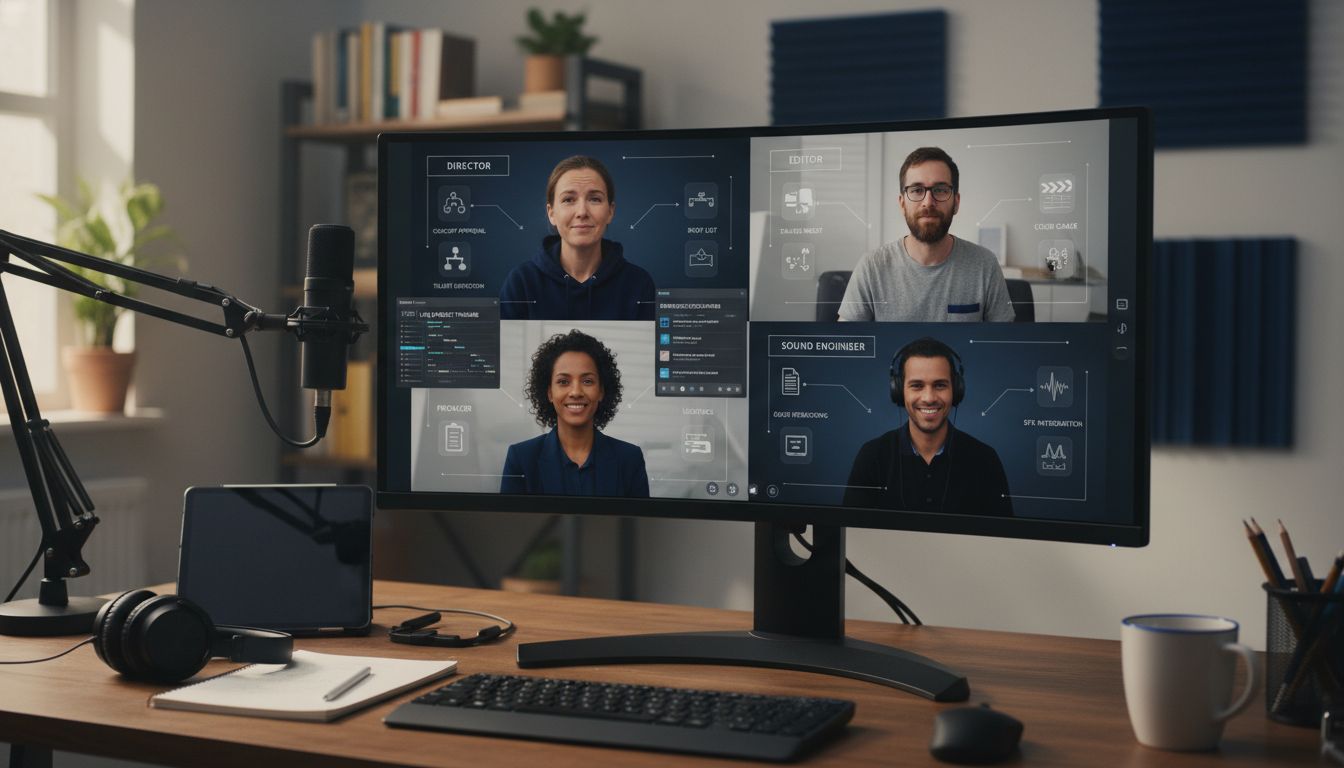
To maximize effectiveness, schedule an initial kickoff meeting where roles are explicitly discussed and documented. Encourage team members to ask clarifying questions and ensure everyone has a written reference they can consult. This approach prevents ambiguity and creates a shared understanding of project expectations.
In the next step, we will explore strategies for maintaining consistent team alignment and managing potential remote work challenges.
Step 3: Leverage Collaborative Project Management Tools
In the world of remote video production, collaborative project management tools are your digital command center. According to research from arxiv, innovative platforms like Eery Space are creating shared virtual environments that dramatically enhance content creation and communication for distributed teams.
Select a project management tool that offers comprehensive features specific to video production workflows. Look for platforms that provide:
Real time task tracking
File sharing capabilities
Integrated communication channels
Workflow visualization
Time tracking and resource allocation
Version control for creative assets
Research from DualStream highlights the importance of synchronous communication tools that enable spatial collaboration. Understanding Video Production Project Management Software can provide additional insights into selecting the right platform for your team.
Remember that the most expensive or feature rich tool is not always the best. Choose a solution that matches your team size, project complexity, and budget.
Conduct a trial period with your team to ensure the selected tool genuinely improves workflow and does not become an additional burden.
In our next step, we will explore strategies for maintaining team motivation and engagement in remote video production environments.
Step 4: Implement Effective Review and Feedback Processes
Creating a robust feedback system is critical for maintaining quality and team morale in remote video production environments. According to the arxiv Empathosphere study, implementing structured review processes promotes constructive communication and collaboration across virtual teams.
Design a comprehensive feedback framework that includes multiple touchpoints throughout your project lifecycle. This should incorporate:
Regular scheduled review meetings
Specific evaluation criteria for each project stage
Documented feedback mechanisms
Opportunities for both team and individual contributor input
Clear timelines for feedback submission and resolution
melp recommends establishing communication norms that make team members feel safe sharing honest observations. This means creating an environment where feedback is seen as a growth opportunity rather than criticism.
Pro tip success requires psychological safety. Encourage team members to provide constructive feedback by modeling transparent communication yourself. Start feedback sessions with positive observations before addressing areas for improvement.
How to Manage Client Expectations Effectively in 2025 can offer additional insights into effective communication strategies.
In our next step, we will explore techniques for maintaining team motivation and preventing remote work burnout.
Step 5: Monitor Progress and Address Challenges Promptly
Successful remote video production requires vigilant progress tracking and proactive problem solving. According to arxiv, FLOW Mapping provides a systematic approach for managing information flows in distributed projects, emphasizing the critical need to monitor progress and address challenges swiftly.
Implement a comprehensive monitoring strategy that includes:
Daily standup meetings
Weekly progress reports
Real time task tracking dashboards
Individual performance check ins
Automated milestone notifications
Early warning systems for potential bottlenecks
According to Computer-Supported Cooperative Work, leveraging technology is key to facilitating effective collaboration. Understanding Video Workflow Software for Filmmakers can provide additional insights into tracking tools that can streamline your monitoring process.
Remember that monitoring is not about micromanagement but creating transparency and support. Approach challenges as team problems to solve collectively. When issues arise, focus on solutions rather than blame. Create a culture where team members feel comfortable raising concerns early and collaboratively developing strategies to overcome obstacles.
In our final step, we will explore strategies for maintaining team cohesion and motivation in remote video production environments.
Master Remote Video Production with Trusted Local Support
Managing remote teams for seamless video production requires clear communication, precise roles, and effective collaboration. But coordinating logistics, securing permits, and sourcing reliable crew on location can become overwhelming, creating stress that affects your whole project. You need a local partner who understands these challenges and makes complex production tasks effortless.
Take the next step toward streamlined remote video production by partnering with Video Production Switzerland. With over 20 years of expertise in handling permits, trusted crew, gear, and logistics, they ensure your international shoot runs on time and without surprises. Explore their comprehensive service process and experience firsthand how their expert local support removes logistical headaches so your remote teams can focus on creativity and collaboration. Start now with a free consultation and turn your remote video production challenges into smooth success.
Frequently Asked Questions
How can I establish clear communication channels for my remote video production team?
To establish clear communication channels, choose multiple platforms that match the complexity of your communication needs, such as instant messaging for quick updates and video calls for detailed discussions. Assess your team’s specific requirements and select tools that facilitate seamless collaboration and reduce misunderstandings.
What steps should I take to set precise expectations and roles in a remote video production team?
To set precise expectations, create a comprehensive role matrix outlining each team member’s responsibilities, decision-making authority, and performance metrics. Hold a kickoff meeting to discuss roles explicitly, ensuring everyone understands how their work integrates into the larger project.
How can I effectively implement collaborative project management tools for remote video production?
To implement collaborative project management tools effectively, select a platform that suits your team’s size and project complexity, incorporating features like real-time task tracking and document sharing. Conduct a trial period with your team to assess if it enhances workflow and communication within a 30-day timeframe.
What should I include in a review and feedback process for remote video production?
Include regular review meetings, specific evaluation criteria for each project stage, and opportunities for both team and individual feedback in your process. Establish clear timelines for submitting and addressing feedback to maintain quality and boost team morale throughout the project lifecycle.
How can I monitor progress and address challenges within my remote video production team?
To monitor progress effectively, implement daily standup meetings and weekly progress reports to track tasks and identify potential issues. Focus on creating a culture of transparency where team members feel empowered to raise concerns and collaborate on solutions to challenges as they arise.
What are the best techniques to keep my remote video production team motivated?
To keep your remote video production team motivated, schedule regular check-ins to discuss challenges and celebrate milestones. Create a supportive environment where feedback is welcomed and team members feel valued, enhancing overall engagement and productivity.
Recommended
