
Cut Swiss Shoot Delays 30% With WooCommerce Inventory and ATA Carnet

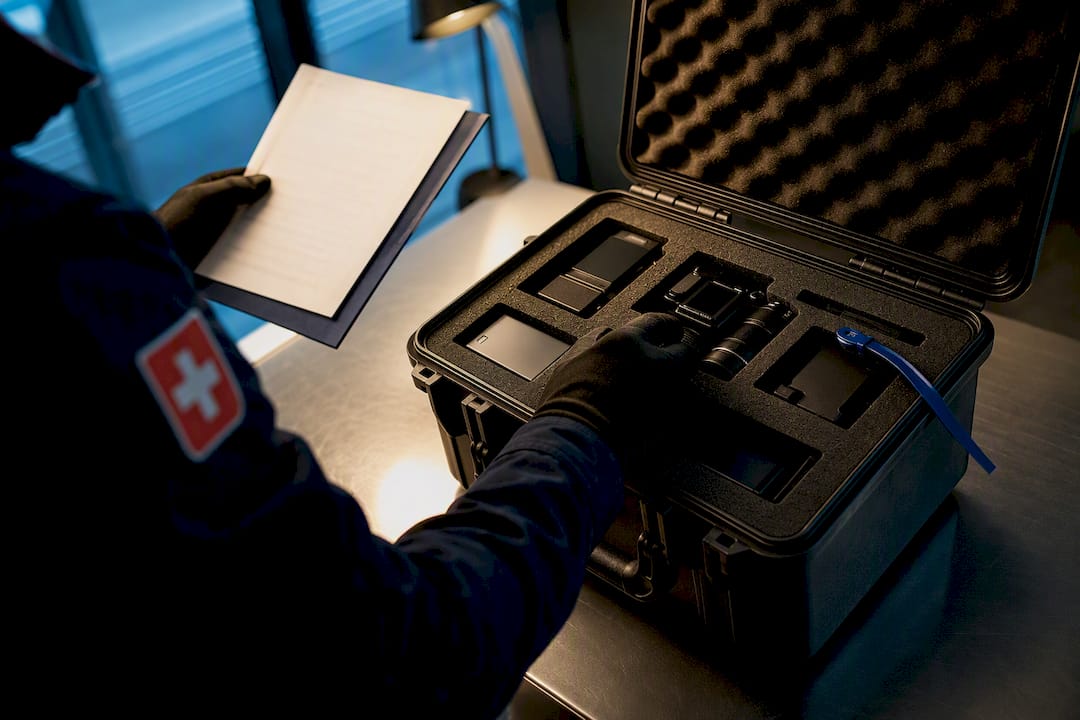
The approach that prevents most multi-location equipment failures is simple to state and hard to fake: build a centralized hierarchical inventory with staging hubs, tag every serialized item, and schedule deliveries based on the call sheet rather than on convenience. Your first move this week should be appointing a single inventory lead and confirming every piece of imported gear is itemized correctly on its ATA Carnet. Everything below explains how to build that system out, from location hierarchy to customs paperwork to the tracking tech that keeps it honest.
TL;DR:
Properly itemizing all serialized gear and establishing a clear location hierarchy can reduce equipment loss and streamline multi-location productions.
Assigning owner roles at each handoff and tracking five item states ensures accountability and prevents mistakes during equipment transfers.
Using Bluetooth tags with mobile check-in apps and cloud dashboards provides effective, affordable tracking solutions to prevent gear from going missing.
Precise customs documentation, including detailed serial numbers and values, is crucial to avoid border delays and production hold-ups.
Engaging local logistical support before production begins can cut delays by addressing constraints at handoff points, permits, and customs in advance.
Table of Contents
How Do You Structure Inventory Across Main, Second and Remote Units?
A production shooting in three Swiss cantons with a main unit, a second unit, and a drone team on a glacier does not need three separate inventory systems. It needs one system with three branches. The strongest model treats main units, second units, and remote locations as separate records that roll up into a single central dashboard, so a production manager in Zurich can see, in real time, whether the second unit in Lausanne has the backup gimbal or whether it is still sitting in a case in Geneva, according to best practices in WooCommerce SEO Automation. This kind of hierarchical asset tracking is what separates productions that lose gear from productions that lose time looking for it, which is a much cheaper problem.
Start by separating three categories of equipment. Serialized items are individually trackable, high-value pieces like cameras, lenses, and drives, each with its own record. Kits are bundles, a lighting kit or a sound bag, that travel and get checked out as one unit even though they contain several serialized items inside. Consumables are gels, tape, batteries, and cable ties. Nobody needs a serial number for gaffer tape.
Your location hierarchy should mirror how gear actually moves: central warehouse, then regional staging hub, then on-day location. Each level needs a named owner and a defined handoff point.
For every serialized item, capture:
Serial number and model
Current owner or department
Last service date and condition notes
Replacement value (for insurance and Carnet purposes)
Current state and location
The rule of thumb on kit composition: if losing a single component would shut down a shoot day, serialize it separately even if it normally travels inside a kit. A single missing wireless receiver has stopped more shoot days than any camera body ever has.
Who Owns Each Step in the Staging and Handoff Workflow?
Multi-location moves fail at handoffs, not in storage. The fix is assigning clear ownership at every transition point and defining exactly what triggers a change in item status.
Four roles cover most productions:
Inventory lead owns the master register and resolves discrepancies between locations.
Transport coordinator owns routing, sequencing, and courier relationships.
Department POCs (camera, lighting, sound, grip) own their kits from checkout to return.
On-site logistics lead owns the staging hub at each location and confirms receipt against the manifest.
Track five states for every item: packed, in transit, received, in use, and returned. Each state change should require a named person’s confirmation, not an assumption that “someone” checked it in.
Sequencing matters as much as tracking. Loads should be planned so the first equipment off the truck is the first thing the crew needs on set, with routes checked in advance for bridge clearances, weight restrictions, and realistic arrival windows. Regional staging hubs that map every load-in and load-out milestone against the shooting schedule let a small crew operate with the discipline of a much larger studio logistics operation, which matters when you are moving between mountain locations with narrow weather windows. Run a dry run of the transport sequence at least once before the actual shoot day, especially for locations with restricted vehicle access.
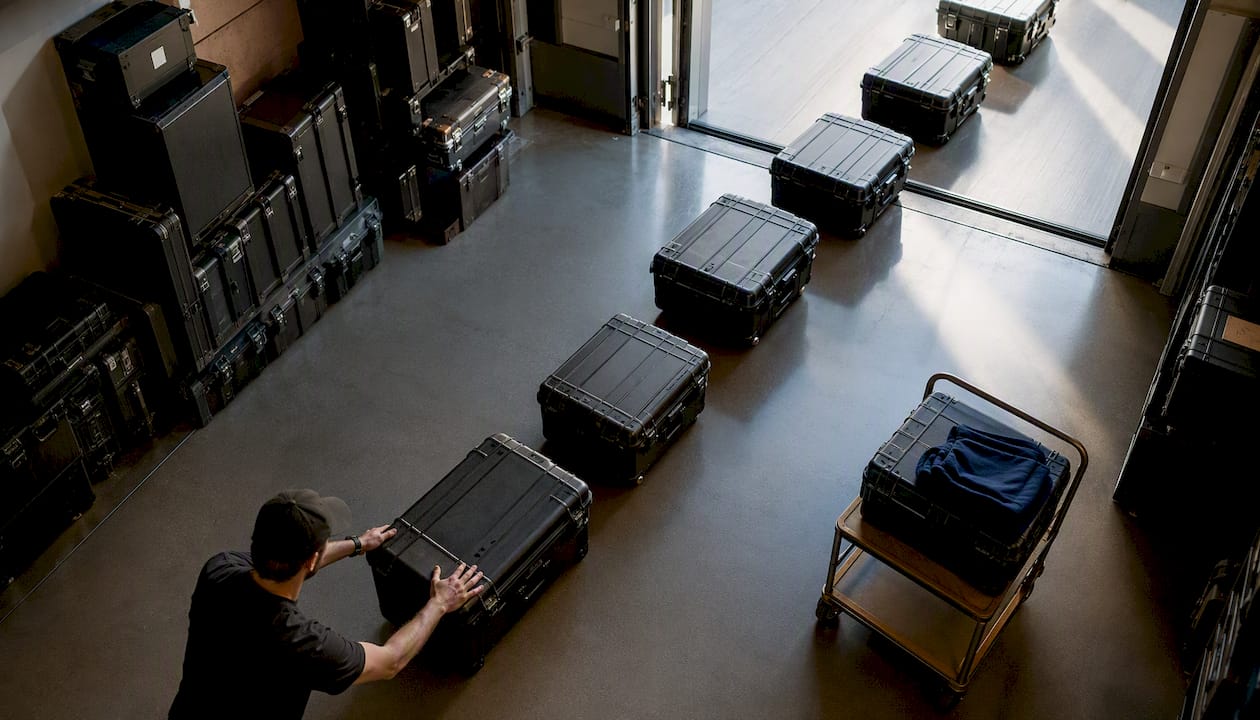
Build a tiered courier plan before you need it: a primary local courier, a backup regional one, and a rapid resupply option for same-day emergencies. Pre-approve a small spending limit for department POCs to authorize emergency replacements without waiting for sign-off from someone three cantons away. Coordinating that sequencing against your actual production schedule is where most of the real savings show up.
Pro Tip: *Give every kit a laminated card listing its contents by item, not by category. “One lighting kit” tells nobody what’s missing when a case comes back light.
What Paperwork Prevents Customs Holds at the Swiss Border?
An ATA Carnet is the standard document for temporarily importing professional equipment into Switzerland, and it is also the single most common point of failure for international productions. Customs officers check three things against the Carnet: serial numbers, declared values, and item descriptions. If any of those three do not match what’s in the case, expect questions, and questions at the border cost shoot days, not hours.
Itemization needs to be exact, not approximate. “Camera package” is not an itemization. “ARRI Alexa Mini LF, serial number XXXXX, declared value CHF 45,000” is. A Carnet with vague line items is functionally the same as no Carnet at all when an officer wants specifics you cannot produce on the spot.
Practical steps that keep gear moving:
Match every Carnet line item to your master inventory register before departure
Photograph serial numbers and pack lists as backup documentation
Confirm insurance values are current, not carried over from a previous shoot
Hire a customs broker or freight forwarder for shipments above a handful of cases, or for any shoot involving drones or specialty rigging
Freight forwarders typically add lead time on the front end, usually several business days for document preparation, but they cut the odds of a multi-day hold dramatically. Build a customs contingency buffer of one full day into any cross-border schedule. It is cheaper to pay for an unused buffer day than to explain to a director why the crew is standing around at a warehouse instead of on location.
Which Tracking Technology Actually Stops Gear From Going Missing?
Most productions don’t need enterprise asset tracking. They need to know, at a glance, where the C300 is right now. Bluetooth Low Energy tags paired with fixed or portable gateways are the pragmatic solution for the vast majority of multi-location shoots: cheap enough to tag dozens of items, accurate enough to confirm an item is in the building or the truck, and simple enough that a department POC can check something in with a phone scan.
RFID and GPS tracking earn their cost only at higher scale, think fleet rental houses or productions running five or more simultaneous units, where the cost of a lost camera body justifies a more precise system.
The minimum viable stack for most Swiss shoots looks like this:
Bluetooth or barcode tags on every serialized item
A mobile check-in/check-out app usable by non-technical crew
A cloud dashboard the inventory lead can check from anywhere
An integration to scheduling or your digital asset management system
The pilot approach that pays off fastest: tag your highest-value items first, cameras, lenses, and drives, and measure three things: utilization rate, loss rate, and on-time availability. Integrated tracking systems that connect tags to scheduling data can automate alerts on missed arrivals and auto-reserve gear to prevent double bookings, which is where most of the measurable time savings actually come from.
Automation is worth the setup time. An alert that fires the moment a case fails to check in at the expected staging hub gives you hours of lead time to redirect a courier, instead of discovering the gap when the crew is already standing on set waiting.
What Should Your Pack-Out, Staging and Wrap Checklists Include?
Three templates cover most of what a production manager needs, and none of them require software beyond a shared spreadsheet or a simple form.
Transit manifest. For each shipment, record: item name, serial number, kit assignment, origin, destination, and the names of who signed it out and who received it. A simple shared register beats an elaborate system nobody updates.
Staging hub timeline. List each hub’s expected arrival window, the call sheet time it needs to support, and a buffer of at least 30 minutes between delivery and required use.
Wrap audit. Before any truck leaves a location, run this five-minute check:
Count kits against the outbound manifest
Scan or visually confirm every serialized item
Flag anything missing to the department POC immediately
Photograph the loaded truck as a record
Sign off with the on-site logistics lead’s name and time
Budget for courier fees, staging hub rental, and a customs contingency line, since these are the costs that get forgotten until they show up as overages.
Why Local Logistics Support Changes the Risk Profile Entirely
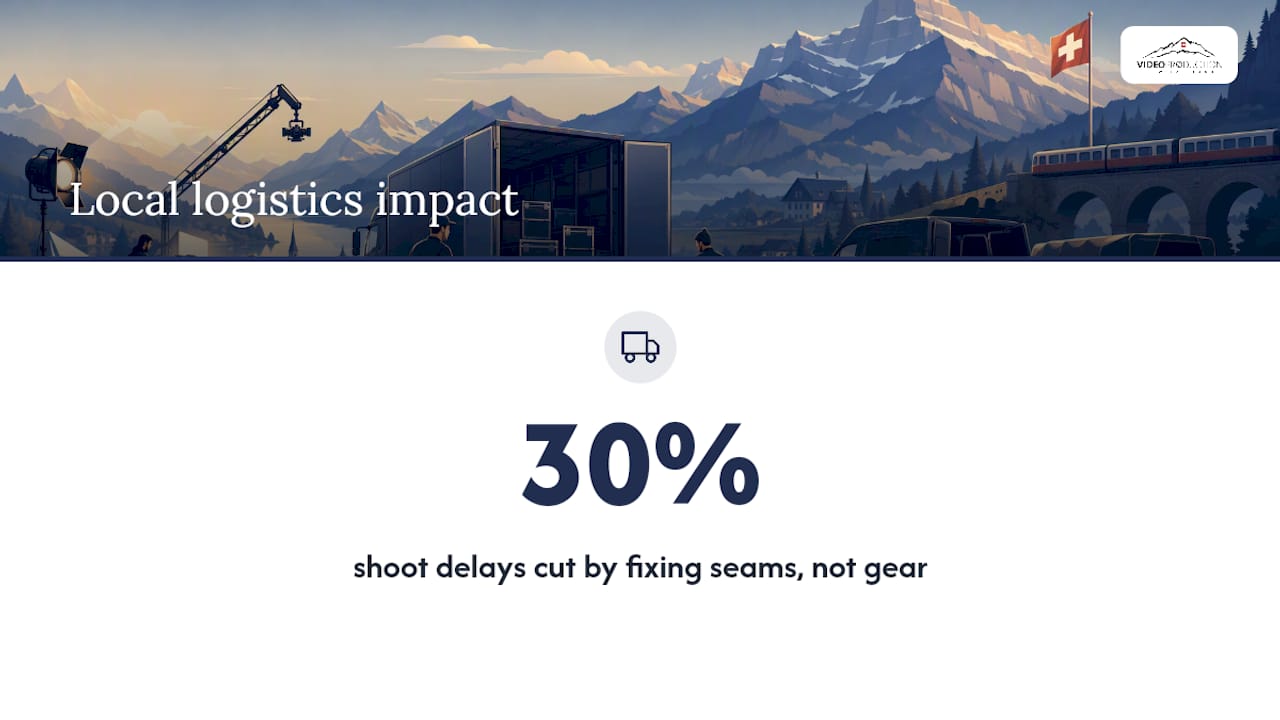
Twenty years of running gear across Swiss cantons teaches you something a spreadsheet never will: the failures that cost real shoot days almost always happen at the seams, the handoff between hub and set, the Carnet line item nobody double checked, the courier who doesn’t know the mountain road closes at dusk. Videoproductionswitzerland’s own operational data shows that optimized inventory location management cut shoot delays by 30% in 2026, and that gain came almost entirely from fixing seams, not from buying better cameras.
The right time to bring in local support is pre-production, not the week before departure. A partner who handles permits, staging hubs, crew sourcing, and customs support in parallel with your own planning catches conflicts your inventory spreadsheet can’t see coming. A genuine free consultation should assess your shoot’s actual location count, gear volume, and customs complexity before anyone quotes a price.
— Pieter
Full-Service Logistics Support for Your Swiss Shoot
There are services available that handle permits, crew sourcing, equipment coordination, staging hub setup, and transport management as one coordinated service, so your inventory lead is managing a system already in place rather than assembling one from scratch under deadline pressure.
[
Every engagement starts with a free initial consultation and needs assessment, where we map your locations, gear volume, and customs exposure before anything is quoted. If you’re weighing budget against complexity, our cost breakdown page lays out what drives pricing for multi-location moves. Reach out through Videoproductionswitzerland to start that assessment and get a staging plan built around your actual shoot dates, not a generic template.
Sources
Recommended
